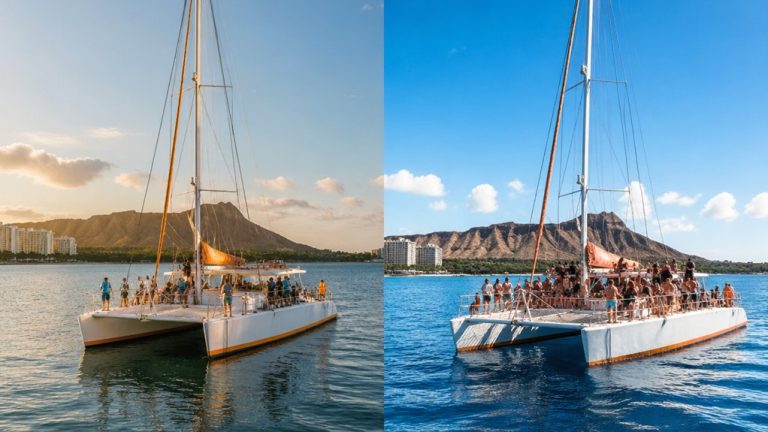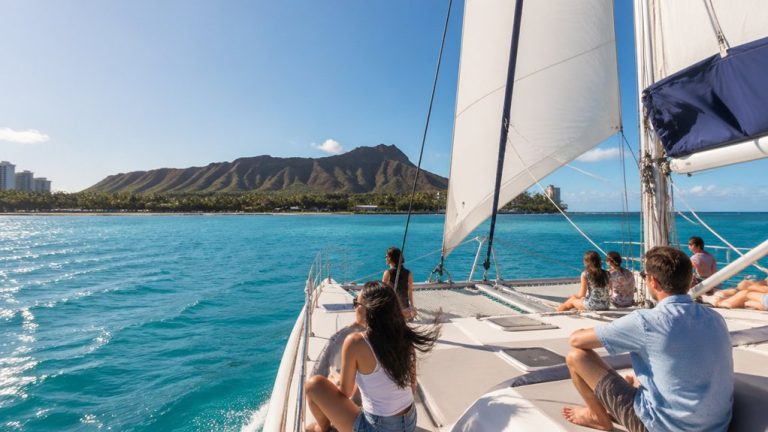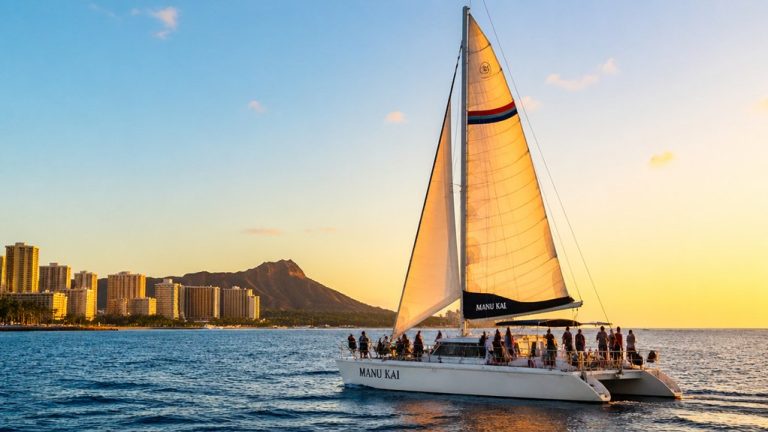

Honolulu gets brief showers on well over 100 days a year, yet many Waikiki catamaran trips still push off right on time. If you step aboard in light rain, you’ll likely feel warm mist on your arms, hear the hulls hiss over small chop, and still see Diamond Head between passing clouds. But once wind builds, visibility drops, or the harbor turns messy, your easy sail can become a very different call.
Key Takeaways
- Go if it’s just light, warm rain and visibility is clear; most Waikiki catamaran cruises run rain-or-shine.
- Reschedule if strong winds, building swell, rough harbor conditions, or poor visibility are expected.
- Thunderstorms, lightning, heavy squalls, and small craft advisories are common automatic cancellation triggers.
- Captains make the final call using real-time harbor, wind, swell, and safety conditions near departure.
- If the operator cancels for weather, you’ll usually get a full refund or easy rebooking.
Will a Waikiki Catamaran Sail in Rain?

Usually, yes, a Waikiki catamaran will still sail in rain. Most operators run rain-or-shine, so light rain alone rarely stops a trip. You should check-in 30 minutes early, because crews monitor the harbor and horizon right up to departure. If they spot unsafe sea conditions, they may cancel due to weather and offer a reschedule full refund. If the boat goes, expect salt spray, soft gray skies, and plenty of splash action, especially on the nets. Many cruises still pour complimentary drinks, which feels cheerfully absurd when your hair’s damp. Dress simply with a cover-up or light jacket, wear sandals that can get wet, and protect electronics before you board. That way, you stay flexible, comfortable, and ready for whatever the ocean decides today there. A typical Waikiki catamaran cruise still feels relaxed and scenic even under cloudy skies.
When Is Rain Fine for Sailing?
Even if a shower drifts across Waikiki, rain is fine for sailing when the ocean stays orderly and the crew has clear visibility.
A passing Waikiki shower rarely stops a sail when the sea stays gentle and the crew can see clearly.
- You can usually go on rain-or-shine departures when light showers pass quickly and the sea state stays comfortable.
- Calm water matters more than gray clouds. If windswell stays modest, you’ll mostly notice cool air and extra spray on the nets.
- Rain can sharpen the show, since moisture and cloud edges sometimes lift sunset colors after a brief squall.
- Check logistics early. A 24-hour notice often protects your refund, while crews monitor sustained gusts near departure before any safety cancellation.
Bring a light shell and expect a splashy ride, especially if you don’t mind getting wet and hearing the hull hum along softly. The best time of year can still shape your experience, since Waikiki catamaran conditions are often more comfortable in seasons with steadier weather patterns.
What Weather Cancels a Catamaran Cruise?
While a gray sky might look dramatic from the beach, light rain by itself rarely cancels a Waikiki catamaran cruise. You’ll usually still go unless weather turns rough enough to challenge safe handling. The common reasons to cancel are strong winds, a building swell, high seas, poor visibility, or thunderstorms that bring lightning risk. If the forecast shows winds around 12–17 knots with gusts near 30, or the swell jumps, your trip may face cancellation due to safety. Heavy squalls can also block visibility even when rain alone wouldn’t. In those cases, operator cancellation means you’re typically offered a full refund or a reschedule. If you cancel within 24 hours, though, you’ll usually lose payment. Harbor calls often arrive early, before breakfast and towels. In Hawaii coastal waters, small craft advisories and seas building into the 15–19 foot range Monday night into Tuesday are strong signs operators may cancel for safety.
How Crews Decide Whether to Sail
Watch the harbor before you watch the sky, because that’s what your captain does. You’ll see the captain decision starts with harbor conditions, not passing rain showers.
- Crews check real-time wind swell, gusts, and chop at the mouth of the harbor.
- They ask whether a USCG-certified boat can run without risking crew safety or passenger safety.
- They compare forecasts with what they hear and feel on deck, because light rain often means little.
- If motion looks rough enough for cancelation due to unsafe handling, they’ll contact you with a reschedule or refund.
That call also depends on the boat. Stable catamarans can shrug off some spray and bounce, but nobody sails just to prove it. In Waikiki, a catamaran cruise may feel smooth or choppy depending on wind and sea state near the harbor entrance. You want caution, not a hero story before breakfast.
What Refund Rules Apply?
So what happens to your money when Waikiki skies turn gray and your sail starts to look doubtful? If you cancel with 24 hours notice, you can usually get a full refund. With operator cancellation for weather or other unforeseen safety issues, refunds are also issued, and a full refund is standard.
The cancellation policy generally makes clear that weather-related operator cancellations qualify for a full refund. Timing matters. Reservations often lock in within a day of departure, so canceling within 24 hours usually means you pay full price. If you reschedule must give enough notice too, though the exact window can vary for large groups. Also watch the check-in time. Most crews require guests arrive strictly 30 minutes prior. Show up late, hear the dock lines snap taut, and you’re treated as a no-show, which means no refund.
Can You Rebook if Weather Changes?

Gray skies don’t always mean your Waikiki catamaran plan is sunk.
- Many crews at Kewalo Basin Harbor still operate in RAIN, so watch for updates before you panic.
- If you give 24 hours notice, or meet the 24-hour notice rule, you can often rebook or reschedule must be requested early, with Full refunds usually available.
- If there’s a cancellation due to weather from the operator, unsafe wind or swell means Full refunds or a new date, even if the clock’s tighter.
- You should check in on time. Miss that cutoff and changes may count as a cancellation. For fast help, phone directly to cancel and ask reservations about last-minute options. They’ll often text or call by morning if conditions shift suddenly offshore that day.
Most departures for Waikiki sails leave from Kewalo Basin Harbor, so operator updates from that marina are the ones to watch most closely.
Which Cruise Type Fits Mixed Weather?
Usually, the best cruise for mixed weather depends on what you want most once the clouds roll in.
| Cruise | Best bet |
|---|---|
| Short Waikiki sail | Go for quick views and a possible Sunset break between showers. |
| snorkel trip | reschedule if rain joins wind, poor visibility, or building swell. |
| Kewalo Basin harbor departure | Watch forecasts closely since harbor chop can worsen fast. |
If you want scenery, choose a short sail. These 1 to 1.5 hour trips often still run, and dramatic skies can reward you. This shorter cruise length can make it easier to fit a sail into a mixed-weather window. If you booked a party sail, expect a wetter, louder ride. If you booked from Kewalo Basin, gusts can make the exit rough. For snorkel plans, play it safe and reschedule. Operators monitor conditions, so stay flexible and check updates early.
What Light Rain Feels Like Onboard
You’ll usually feel light rain as warm mist on your face with a cool breeze moving through the boat, so it’s more invigorating than miserable. Near the net, spray can make you feel wetter than the shower itself, while shaded seats and partial cover keep most riders from getting soaked. Since Honolulu rain often blows through fast, you might get a few damp minutes, then look up and catch glowing clouds as the sky shifts again. Bringing sun protection and a light waterproof layer helps you stay comfortable as conditions change.
Warm Rain, Cool Breeze
Stepping onto a Waikiki catamaran in light rain can feel oddly perfect, because the drops stay warm while the ocean breeze brushes your skin with a cooler snap.
- The light Hawaiian rain is usually warm and brief, so you notice softness first, not a chill.
- On the splash-action net, salty spray joins the cool ocean breeze and leaves your shirt damp.
- A quick-dry layer and small towel keep you comfortable while the air stays pleasantly balmy.
- If you want a break, cabin and shaded seating help, and a dry pouch lets you protect electronics while you watch Diamond Head views shift beautifully between showers from the catamaran.
You hear rigging tap, see gray silk on the water, and realize drizzle can make sunset colors look richer, not ruined today.
Spray Versus Showers
Often, light rain onboard feels less like a real shower and more like a fine mist mixed with salt spray.
In Waikiki, light trade-wind showers usually move fast, so you get damp without getting drenched. On the catamaran net, water slips through, but splash-action nets and open bows still flick droplets onto your face and seat. If wind-driven rain teams up with the breeze, the air feels cooler, so a windbreaker helps a lot. You’ll want a quick-dry towel too, since the deck stays slick and your gear can get damp. The fun part is that visibility often holds, so you can still watch Diamond Head hover under moody clouds and sunset color glow. Think mist, not monsoon, unless a squall thickens the horizon. If you’re prone to queasiness, motion sickness can feel stronger when cool rain, spray, and swaying seas combine, so it helps to prepare before boarding.
What to Bring for a Rainy Sail

For a rainy sail, you’ll want a breathable rain jacket that cuts spray and wind without turning into a sweaty tent. You should also pack a small dry bag or waterproof pouch, plus a quick-dry towel and an extra layer, so your phone stays safe and you stay comfortable when the weather flips. Grippy shoes, a foldable hat, and even motion-sickness remedies can make the ride feel less wild and a lot more fun. If you’re unsure what works best, catamaran cruise outfits can help you choose layers and footwear that handle both light rain and ocean spray.
Rain Gear Essentials
Usually, a rainy Waikiki sail feels warm until a quick shower rolls in and wind-driven spray turns the deck slick, so pack like you expect to get a little wet.
- Slip on a lightweight, waterproof, packable shell or poncho fast.
- Choose quick-dry clothes with a synthetic or merino base layer, not cotton.
- Stash your phone in a waterproof dry bag, and tuck keys and a wallet into backup plastic.
- Wear non-slip closed-toe water shoes, then bring a microfiber towel and extra lightweight layer for the breezy ride home.
If anyone in your group has mobility needs, ask the operator in advance about wheelchair accessible boarding and deck options before heading out in wet conditions. You’ll move confidently when the deck shines like glass and sea mist sneaks into every pocket suddenly. You’ll stay comfortable while sails snap overhead, rain taps the canopy, and Honolulu’s shoreline still glows through the gray.
Dry Bags And Layers
Rain gear gets you through the shower, but a smart bag-and-layer setup keeps the whole sail easy. Pack a waterproof dry bag for your wallet, camera, sunscreen, sunglasses, and a light jacket. You’ll protect electronics with a waterproof phone pouch and spare zip-top bags. Wear quick-drying layers, then add slip-resistant water shoes. Stash a compact towel and change of clothes in a sealed dry bag because splash action loves the nets. Most boats also have onboard bathrooms, which adds comfort if rain stretches the sail longer than expected.
| Bring | Why |
|---|---|
| 10–20L bag | Fits most operator rules |
| Fleece plus shell | Evening breeze cools fast |
Seats stay damp after showers, and the bow can feel like a cheerful car wash. If clouds pass, you’re still comfortable, dry enough, and ready to watch Waikiki glow pink at sunset.
How Early Should You Check In?
How early should you show up when the sky looks moody over Waikiki? Treat Check-in time seriously. For most sails, you should be there 30 minutes prior to departure. Some Living Ocean Tours and Lokahi trips use 15 minutes, but arriving early is smarter when sidewalks are slick and parking be limited. The usual check-in time for a Waikiki catamaran cruise is 30 minutes before departure, even if some operators allow less.
- For Friday night fireworks, aim for 45 minutes early.
- If lots fill fast, add extra buffer, about 10 to 20 minutes.
- If clouds look doubtful, call reservations at (808) 427-0017 before you leave.
- Remember, failure to check in on time can mean losing your spot and your refund.
That little cushion lets you breathe, hear the rigging clink, and step aboard without a wet sprint in the drizzle.
When Is Rescheduling the Better Choice?
Getting there early helps, but sometimes the smarter move is staying dry on shore and picking a better window.
If forecasts show high winds above about 20 knots and gusts near 30, reschedule. Light rain usually isn’t the problem on a rain-or-shine sail. Sea conditions are. If the operator warns about harbor safety or a wind advisory, treat that message like a flashing buoy and act before the cancellation deadline.
You should also think about seasickness, splashy nets, and your check-in time. If rough water plus tight dinner plans sounds annoying, choose a later trip. Most crews offer a refund or easy rebooking when they call it unsafe, and sunsets still glow after passing showers. Often brighter skies arrive tomorrow with less spray too. This is why best time to book matters, since choosing a calmer day often leads to a smoother Waikiki catamaran cruise.
Frequently Asked Questions
Are Seasickness Remedies Recommended Before a Waikiki Catamaran Cruise?
Yes, you’ll want motion sickness prevention: follow medication timing, try natural remedies like pressure bands and ginger options, use hydration tips and smart food choices, ask about prescription patches, and plan nap preparation afterward, too.
Can Children Join a Rainy Waikiki Catamaran Sail Safely?
Like snug ducklings, your kids can sail safely if you’ll prioritize children safety: life jackets, no age limits, rain gear, activity alternatives, nap schedules, supervision ratios, medical considerations, and sensory sensitivity planning before boarding today.
Are Onboard Drinks and Snacks Available During Wet Weather Cruises?
Yes, you’ll usually get beverage service and complimentary refreshments in light rain, but bar availability, snack options, menu changes, packaged snacks, hot drinks, alcohol policy, and the onboard pantry can shift or tighten for safety.
Is There Covered Seating on Waikiki Catamarans During Showers?
Yes, like Noah eyeing clouds, you’ll find covered seating, weather awnings, a partial canopy, and sometimes an indoor cabin or roofed lounge; but sheltered bow, mesh netting, wet lockers, and seat drainage won’t keep you dry.
Can You See Marine Life During a Rainy Waikiki Cruise?
Yes, you can see marine life if visibility conditions and water clarity hold; you’ll notice fish behavior, coral viewing, seasonal sightings, pelagic species. Use photography tips, ask your tour operator, and don’t expect bioluminescence chances.
Conclusion
Think of your sail like a street market at dusk. A little drizzle makes the colors glow and the air feel cool on your skin. The catamaran still hums forward. Lines creak. Spray taps your shins. But when the sky pulls down a heavy curtain of squalls, you don’t bargain with it. You reschedule. Check in early. Watch the harbor. Bring a shell and dry pouch. If the horizon stays open, you can still have a fine, rain-bright ride.