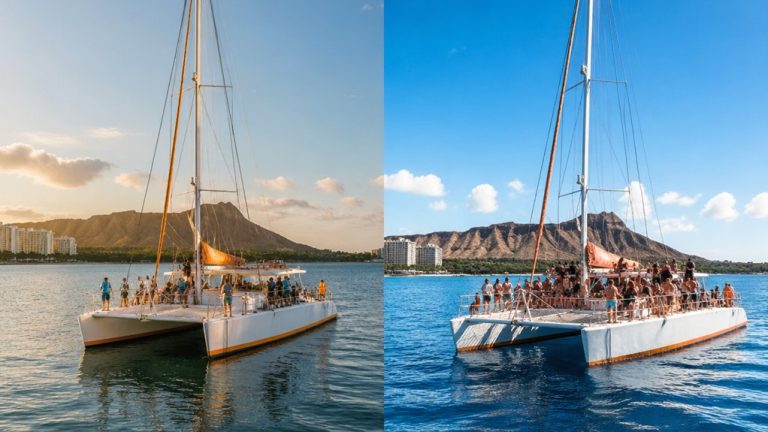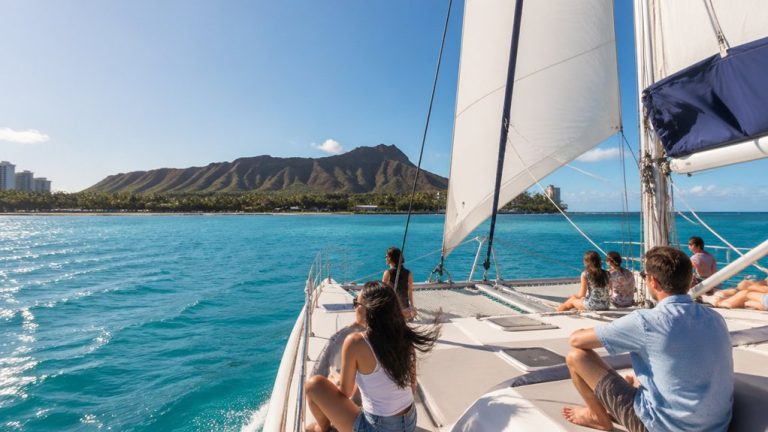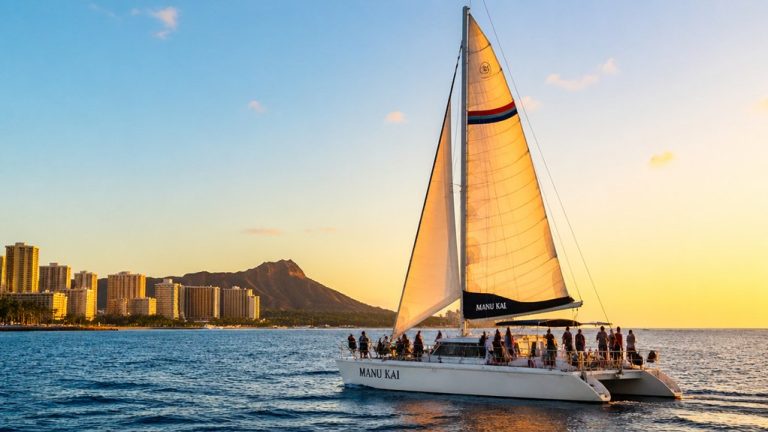

A Waikiki catamaran cruise can get a little lively, but it’s rarely the kind of ride that makes you question your life choices. You’ll usually skim just off the beach, with Diamond Head in sight, salt on your arms, and a steady hiss under the hulls. Some days bring more bounce, especially in winter or near sunset. Still, where you sit and when you go can change the whole feel of the trip.
Key Takeaways
- Waikiki catamaran cruises are usually mildly bouncy, not extremely rough, because most stay within about a mile of shore in calmer nearshore waters.
- The choppiest part is often the early eastbound leg toward Diamond Head, where wind chop and swells hit more directly.
- Winter, especially December through March, typically brings rougher rides due to stronger trade winds and larger swells.
- The ride often feels smoother after turning back toward Waikiki, and conditions may soften further after sunset.
- If you are motion-sensitive, sit near the center, face the horizon, and take seasickness medication 30 to 60 minutes beforehand.
Are Waikiki Catamaran Cruises Usually Rough?

While a Waikiki catamaran cruise can get bouncy, it usually isn’t a full-on rough-water ordeal. You’ll often stay within about a mile of shore, where nearshore calm is more common than big open-ocean rolling. On many trips, beach‑boarding feels splashy and fun, not dramatic, and the crew safety briefing sets clear expectations fast. Passenger reviews are mixed, though. One Waikiki catamaran may hit wind chop and leave sensitive riders queasy, while another sunset sail glides out smooth enough for easy photos. Most Waikiki catamaran cruises also last a fairly manageable amount of time, which can make any motion feel easier to handle. If you’re prone to motion sickness, bring Dramamine and keep your eyes on the horizon. You might feel extra bumping when the boat heads into winter swell, then notice a gentler ride on the way back, with salt spray, trade winds, and Honolulu ashore.
When Are Waikiki Catamaran Waters Roughest?
If you want to know when Waikiki catamaran waters feel the choppiest, look first at winter and wind. December through March often brings stronger trade winds, bigger winter swells, and extra wind chop, so you’re more likely to notice rough seas along Waikiki. On a typical sunset sail, the bumpiest stretch often comes early, when you head east toward Diamond Head and meet the breeze and swell direction head-on. After the turn back and after sunset, the ride often softens.
Still, seasonal variability matters. You might get a glassy summer cruise, or a surprisingly bouncy October evening if the forecast spikes. Because your Waikiki catamaran usually stays near shore, you’ll feel more shoreline chop than deep-ocean motion, but windy days can send drinks skittering. Forecasts can turn especially rough when northwest swell builds and seas climb into hazardous ranges early in the week.
How Far Offshore Do Waikiki Catamarans Go?
For most Waikiki catamaran sails, you won’t head far into open ocean at all. Waikiki catamarans usually keep the offshore distance to about a mile, sometimes 1.5 km, so you stay in nearshore waters with steady shoreline visibility.
| Route | What you notice |
|---|---|
| Coastal route | Diamond Head stays in view |
| Sunset cruise | City and beach remain close |
| Eastern leg | Swell conditions may feel bigger |
That coastal route favors passenger comfort and safety/return proximity if weather shifts. Choosing best seats near the center can also make the ride feel steadier if the water gets a little bouncy. You’ll usually sail toward Diamond Head, hear the hull slap lightly, watch hotels shrink just a little, then arc back. Even when the water livens up, you’re still near land, landmarks, and a quicker ride home. Open sea drama isn’t really the point here. Easy views are for you.
How Can You Avoid Seasickness on a Waikiki Catamaran?
Usually, you can head off seasickness on a Waikiki catamaran with a little timing and a few smart moves before the lines even come off the beach. For solid seasickness prevention, take motion sickness pills like Dramamine 30 to 60 minutes before boarding. If you’re very sensitive, ask your doctor about scopolamine.
Once aboard, choose midship seating or stay on deck facing forward. Better yet, face the horizon and let your eyes settle on the blue line instead of the bouncing bow. Avoid alcohol and too much coffee, and eat a light snack first. Bring ginger candies or acupressure wristbands, too. Earlier morning sails and some sunset trips can feel calmer, while winter wind chop may jostle you more near Diamond Head. Tell the crew if you’re prone. Following a few seasickness tips before departure can make a Waikiki catamaran cruise much more comfortable.
Frequently Asked Questions
How Long Does a Typical Waikiki Catamaran Cruise Last?
You’ll usually spend 1.5 to 2 hours on a Waikiki catamaran; typical duration, cruise length, trip length, average time, tour duration, sailing hours, commute time, harbor departure, return schedule, and time onboard can vary slightly.
Are Waikiki Catamaran Cruises Suitable for Young Children?
Yes, within a mile offshore, you’ll find safety features, age restrictions, life jackets, child seating, stroller storage, and entertainment options; check nap schedule, weather tolerance, motion sickness, and restroom access before booking for young children.
What Should You Wear on a Waikiki Catamaran Cruise?
Wear sun protective clothing, quick dry swimwear, lightweight layers, a light rainjacket, waterproof sandals or secure footwear, a wide brim hat, polarized sunglasses, reef safe sunscreen, and bring a small drybag so you’ll stay aboard.
Can You See Dolphins or Turtles on a Waikiki Catamaran Cruise?
Yes, you’ll glimpse turtles and sometimes dolphins; like reading the sea’s parables, you follow guided commentary on dolphin behavior, turtle sightings, seasonal migrations, best viewing, snorkeling etiquette, conservation impact, photo opportunities, night spotting, and feeding myths.
Do Waikiki Catamaran Cruises Provide Drinks or Snacks?
Yes, you’ll get complimentary waters, and some cruises offer an open bar, alcohol packages, drink vouchers, or an onboard menu with snack options; check coffee service, cashless payments, BYO restrictions, and dietary accommodations before booking.
Conclusion
You’ll likely find a Waikiki catamaran pleasantly punchy, not wildly rough. Stay midship, watch the horizon, and keep Diamond Head in sight as the sails snap and the hull softly slaps. Winter wind can stir bigger swells, especially on the ride out, but the turn home usually feels smoother and sweeter. Pack a motion-sickness fix, pick a calm morning if you can, and you’ll trade worry for warm spray, wide views, and a breezy grin.