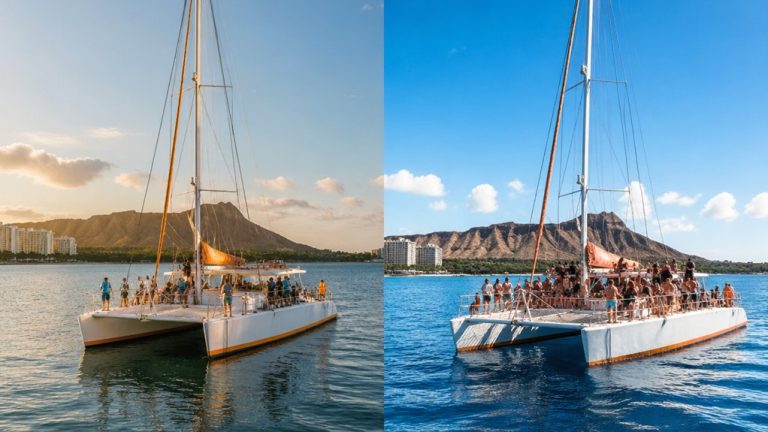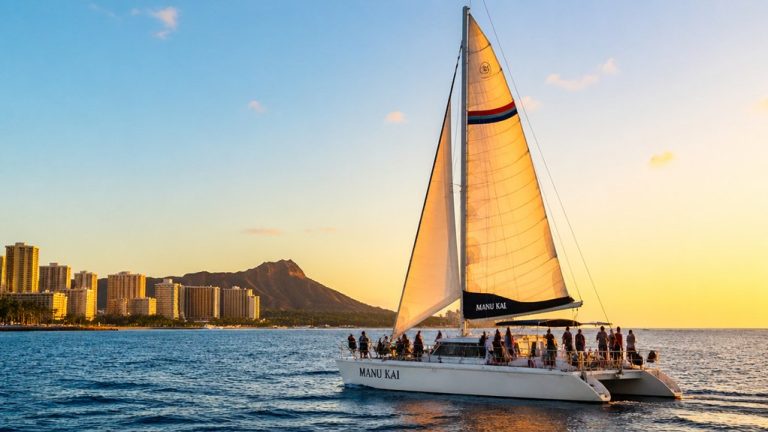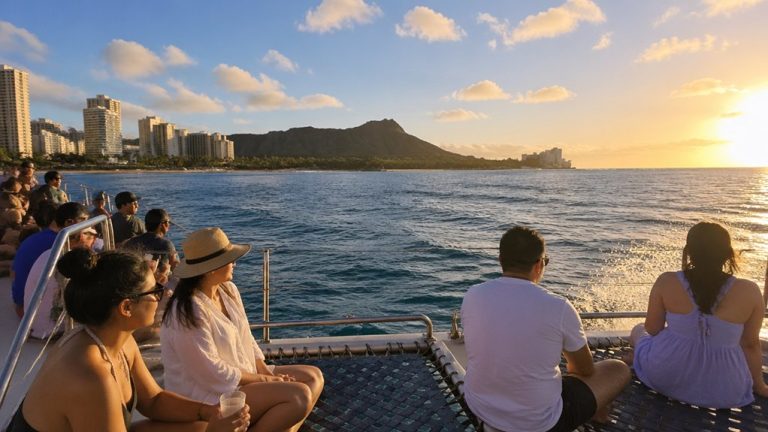

If you want Waikiki at its smoothest, timing matters more than luck. You’ll usually find the calmest catamaran rides in April, May, September, and October, with easier swells, softer wind, and water that looks almost polished in the morning light. Head out early and Diamond Head often sits sharp against a quiet blue horizon. Sunset sails can still be lovely, but they’re not always the gentlest. So when should you actually book?
Key Takeaways
- April, May, September, and October usually offer the calmest Waikiki catamaran cruises, with lighter winds and smaller swells.
- Summer mornings are often smooth and glassy, while afternoon trade winds can create choppier conditions.
- Winter whale season, January through March, adds whale-watching benefits, though offshore chop and swells are more likely.
- Early morning departures, especially before 9:00–10:00 AM, usually provide the steadiest water and lowest seasickness risk.
- Waikiki’s protected south shore stays calmer than more exposed areas, making nearshore cruises smoother year-round.
When Are Waikiki Catamaran Cruises Calmest?

If you’re chasing the smoothest sail, aim for April, May, September, or October, when Waikiki often sees lighter winds and smaller swells. You’ll usually get smoother water on an early morning departure, before the breeze ruffles the surface and turns the harbor chatter into a soundtrack. Waikiki’s south shore setting also helps. It’s more protected than Oahu’s wilder coasts, so you can still find smooth sailing even outside April May September October. Choose a shorter route that stays near shore if you want less chop and more time watching Diamond Head glow above the palms. One smart move: book early in your trip. That gives you room to shift plans if the ocean wakes up feeling moody after breakfast on some trade-wind days too. Even around Oahu, small craft advisories and bigger northwest swells can make conditions much rougher from Monday night into Tuesday.
Which Waikiki Months Have the Best Odds?
You’ll usually get your best odds for a calm Waikiki catamaran ride in April, May, September, or October, when winds ease up and the water often looks smoother and silkier. If you book a morning or early-evening sail in those months, you’re even more likely to hear soft wave sounds instead of extra slap from afternoon wind. Winter can still work on Waikiki’s protected south shore, while summer often starts calm and clear, but each season brings a few more surprises, so booking early in your trip gives you room to switch days if the ocean gets moody. Many visitors find a smooth catamaran cruise more likely during these lighter-wind windows, especially on Waikiki’s sheltered south shore.
Calmest Shoulder-Season Months
Often, the best odds for a smooth Waikiki catamaran cruise show up in the shoulder months of April and May, with September and October close behind. In April May, you’ll often find warm water, lighter trade winds, and a ride that feels more glide than bounce. September October can bring another sweet spot, especially on Waikiki’s south shore, where conditions often stay steadier. If you can, book a morning departure before mid-morning, when local winds and chop usually start waking up. Even then, the ocean keeps a playful streak, so check the daily surf and wind forecast before you lock plans in. It’s also smart to book your sunset catamaran cruises early in your trip, so you can reschedule if the sea gets moody. Daytime cruises can also pair especially well with these calmer shoulder-season windows when you’re prioritizing smoother water over sunset views.
Winter Vs Summer Odds
While summer can look like the easy winner, Waikiki’s best odds for a calm catamaran ride usually land in April, May, September, and October, when winds tend to stay milder and storm swell is less of a spoiler. The best time of day for a Waikiki catamaran cruise is often the morning, when tradewinds are lighter and the water is typically smoother.
- In summer, you can score glassy blue mornings and warm air, but afternoon winds and south swell often roughen the water, so book early.
- In winter, Waikiki stays more sheltered than the North Shore, yet wind chop and stray south swells can still make the ride less smooth.
- If you want the safest bet, choose shoulder-season mornings and stable double-deckers or stabilized cats. You’ll usually get clearer views, softer spray, and fewer surprise bumps, plus quiet sails under bright skies and Diamond Head glowing ahead, beautifully.
Still comparing Waikiki Sunset Cruise?
Ask for tour ideas, hotel suggestions, or a simple trip plan that combines both.
Trip Helper
Is Morning or Sunset Water Calmer?
Usually, morning water feels calmer in Waikiki, since the trade winds tend to build as the day goes on and early departures before about 9:00 or 10:00 AM often get the smoothest ride and clearest views.
If you want Calm water, book early. A sunset sail can still look gorgeous, but it often feels choppier later in the afternoon. You’ll also ride more comfortably on a larger catamaran. If you’re prone to motion sickness, those earlier, calmer departures can help prevent seasickness on Waikiki catamarans.
| Time | Feel | Move |
|---|---|---|
| Early morning | Smoothest water | Book first |
| Late afternoon | More wind chop | Expect bumps |
| Larger catamaran | Less motion | Sit midship |
That simple choice can mean quieter spray, steadier horizons, better photos, and a friendlier ride if your stomach starts acting dramatic at sea.
Why Are Spring and Fall Calmer in Waikiki?

If you sail Waikiki in late spring or early fall, you’ll usually catch lighter winds and fewer big swells, which means the water often feels flatter and the ride sounds less splashy than bumpy. You also get smoother morning departures, since the sea breeze hasn’t had time to stir up extra chop yet. That’s why these shoulder-season trips can feel especially easy on your stomach, your camera, and your sunset mood. This makes spring and fall one of the best times to book a Waikiki catamaran cruise.
Lighter Seasonal Winds
Because spring and fall soften Waikiki’s usual wind pattern, catamaran rides often feel calmer right from the dock. In late spring and early fall, lighter trade winds usually mean gentler mornings, less chop, and fewer surprise gusts. You’ll notice smoother glides across Waikiki’s protected south shore, especially before sea breezes wake up.
- Morning sails often start under 10 to 12 knots, so the deck feels steadier under your feet.
- Weaker seasonal pressure patterns reduce wind speed, which cuts the bumpy texture stronger trades can create.
- For the calmest catamaran rides, book early departures and skip forecast windows with Kona lows or strong trade-wind surges.
You may hear the hull hiss and the rigging tap, not the sail snapping hard above you. Many Waikiki catamaran cruises feel especially easygoing in these calmer seasons, making the overall ride more predictable for first-time passengers.
Fewer Winter Swells
As winter surf energy fades and summer’s stronger trade pattern hasn’t fully kicked in, spring and fall often bring Waikiki one of its nicest gifts: smaller swells and smoother water. You’ll usually find fewer south swells then, so your catamaran ride has better odds of feeling easy, steady, and splash-light near shore. Waikiki’s protected south shore helps too, especially compared with Oahu’s rougher North Shore in winter. Conditions can still change fast, so pick a stable boat and book early in your trip for flexibility. Spring and fall can also offer a pleasant contrast to peak whale watching season, when winter ocean activity often feels busier on the water. That shoulder-season mix often means quieter spray, softer hull sounds, and more time admiring Diamond Head nearby.
| What you notice | Why it matters |
|---|---|
| Smaller wave lines | Gentler motion |
| Less wind chop | Smoother deck time |
| Protected shoreline | Calmer nearshore water |
Smoother Morning Departures
While Waikiki can look inviting all day, the smoothest catamaran rides often start early, before the sea breeze wakes up and roughens the surface. If you book morning departures in late spring or early fall, you’ll usually find milder winds, a smaller swell, and less chop under the hull. Waikiki’s south shore location helps too, since it dodges most big North Shore winter energy. Choosing from the best seats on board can also make the ride feel more comfortable, especially on calmer mornings when views stay clear and steady.
- You get steadier water before mid-morning breezes kick in.
- You often see clearer blue water for reef and fish spotting.
- You still need to check forecasts, because fronts, swell pulses, and timing can change the mood fast.
Pick April to May or September to October, then go early. Your coffee might still be warm at the dock.
Are Summer Waikiki Cruises Usually Smooth?
Usually, summer Waikiki cruises feel pretty smooth, especially if you book a morning sail. In summer, the calmest rides often show up early, when light winds skim the south shore and the water looks bright and blue. Because Waikiki sits on Oahu’s protected side, nearshore catamaran routes usually stay steadier than open-ocean trips. You may notice clearer water too, which makes snorkeling feel easier and more relaxed. By afternoon, local breezes can build and add some bounce, so earlier departures still give you the best shot at glassier seas. If you’re prone to motion sickness, choose a stable double-decker or a SeaKeeper-equipped boat. You’ll likely hear less hull slap and spend more time admiring Diamond Head than your stomach on board that day happily. If you’re planning around trip length, checking cruise duration ahead of time can help you pick the smoothest part of the day.
Can Winter Still Be Good in Waikiki?

Winter can still be a great time to sail in Waikiki, even if the ocean has a little more personality. You can absolutely enjoy winter sails if you pick the right boat and time of day. Morning and early afternoon often feel smoother, while later trips can get choppier. Bigger catamarans and stabilized vessels help a lot, especially if you’re sensitive to motion. A small group catamaran can also make winter sailing feel more relaxed in Waikiki, with fewer passengers and a calmer overall experience.
- Peak whale watching adds real magic to day sails and sunsets.
- Booking early in your trip gives you room to reschedule if weather turns grumpy.
- If seasickness follows you, take meds, sit midship, watch the horizon, and choose routes that stay closer to shore.
You may get a bumpier ride, but you’ll also get breezes, bright water, and maybe a whale tail.
How Waikiki’s South Shore Affects Conditions
Geography does Waikiki a big favor: its south shore position shields many catamaran cruises from the giant winter surf that slams Oahu’s North Shore. That gives you a better shot at gentler water, even when winter wakes up elsewhere. Still, the south shore isn’t a magic bubble. Local winds and short south swells can rough up the surface fast, adding chop and spray.
If you want calmer odds, book a morning departure before the trade winds gain muscle. You’ll often get smoother water, clearer views below, and better conditions for spotting turtles or bright fish. Sailing past Diamond Head can also add one of Waikiki’s most iconic coastal views to a catamaran cruise. Timing matters too. April through May and September through October often pair south shore protection with mild winds and smaller swells. That combo can feel like Waikiki showing off a little, in the best possible way.
How Far Offshore Do Waikiki Catamarans Go?
Out on the water, most Waikiki catamarans don’t head far into the open ocean. You’ll usually cruise within a few hundred yards to about 1 or 2 miles offshore, where the south shore keeps Oahu’s skyline front and center and the ride feels steadier. A Waikiki sunset cruise often stays under a mile out, while snorkeling trips to Turtle Canyon may reach 1 to 3 miles to find reef habitat. Most Waikiki catamaran cruises set sail from the beaches and launch areas along Waikiki, which also helps explain why many routes stay close to shore.
- You get bright hotel views and Diamond Head in one sweep.
- You hear water hiss along the hull instead of long, empty ocean silence.
- You can compare routes fast by checking each tour’s departure point, reef stops, and stated zones.
Operators like Maita‘i and Holokai usually track along shore, not toward the deep blue.
Which Wind and Swell Conditions Matter Most?
Watch the forecast, because wind speed and swell shape your ride more than anything else. On Waikiki’s south shore, you’ll usually feel a smoother sail when wind stays under about 10 to 12 knots. Once it blows 15 to 20 knots, chop builds fast, spray snaps across the deck, and the boat starts talking in creaks.
You should also check swell height and period, not just the headline number. A 2 to 3 foot swell with a short period often feels like easy rolling. A longer-period south swell above 3 to 4 feet can lift the catamaran more noticeably, even in light wind. Morning trips are often calmer before sea breezes wake up. Shoulder seasons improve your odds, and routes closer to shore usually feel steadier overall. For official local marine and weather updates, the NWS Forecast Office Honolulu posts Weather.gov forecasts and map updates for Hawaii.
Which Waikiki Cruises Suit Nervous Riders?
If you’re a nervous rider, you’ll usually feel best on a morning or early-afternoon Waikiki cruise, when the water is often smoother and the breeze hasn’t started tossing the boat around. You can stack the odds in your favor by choosing a stable catamaran like a Coast Guard–inspected double-decker or a boat with extra stabilization, so the ride feels more like a glide than a wobble. From the first soft push off the dock to the bright blue horizon ahead, you’ll notice that the right timing and the right boat can make your whole trip feel a lot easier. If accessibility is a concern too, ask whether the operator offers an accessible catamaran experience in Oahu and what boarding assistance is possible before you book.
Calm Morning Cruises
Because Waikiki’s water is usually gentlest right after sunrise, nervous riders tend to do best on calm morning catamaran cruises, especially in the April to May and September to October shoulder seasons when winds ease and swells often stay smaller. You’ll usually find calmer south shore routes and easier starts before trade winds wake up. On a Waikiki catamaran cruise, you can expect a relaxing experience with scenic ocean views and a gentle pace that suits first-time or hesitant passengers.
- Book early day snorkel or wildlife trips with beginner-friendly crews.
- Sit midship on the main deck, where motion feels softer.
- Bring acupressure bands or meds, and schedule your cruise early in your trip.
If you visit in winter, choose morning whale watching over late afternoon sails, when wind chop can slap the calm water awake. You’ll hear softer surf, see clearer light, and step aboard with a steadier stomach.
Stable Boat Features
Often, the boat itself makes the biggest difference when your stomach likes calm water and low drama. You’ll feel steadier on catamarans with SeaKeeper stabilization, like Lokahi, or on larger Coast Guard-inspected double-deckers such as Coral Kai. They trim roll, board easily, and usually keep helpful crew nearby.
| Feature | Why you care | Feeling |
|---|---|---|
| SeaKeeper | Cuts side-to-side motion | You exhale |
| Double-decker hull | More size, less wobble | You relax |
| Covered seats and rails | Shade and support | You settle |
Pick comfort-focused, family-friendly trips that hug Waikiki’s south shore instead of heading far offshore. Covered seating, non-skid decks, and trained crew matter. Bringing sun protection and a light layer can also make the ride feel much more comfortable from start to finish. Book in April, May, September, or October, ideally earlier in your trip for easy rescheduling. Morning departures help before trade winds start nudging the water around.
How to Avoid Seasickness on a Catamaran
Usually, a smooth Waikiki sail starts before you even step onto the catamaran. Take meclizine 1 to 2 hours before boarding, since prevention works better than chasing nausea later. Sit amidships. Choose the lower deck and lock your eyes on the horizon when Diamond Head starts bobbing.
- Pick a morning trip or shoulder season dates like April to May or September to October for calmer water.
- Eat light. Skip greasy plates and alcohol, drink water, and bring crackers or toast.
- Pack backup help like acupressure wristbands or ginger candies for mild queasiness.
First-time sailors often do best on a morning cruise because trade winds and afternoon chop can build later off Waikiki. You’ll hear rigging tap, feel salt on your skin, and notice the ride stays easier when your stomach isn’t busy fighting the sea on breezy days off Waikiki Beach.
Are Waikiki Sunset Cruises Worth It?
Yes, Waikiki sunset cruises are often worth it because you get Diamond Head, the Honolulu skyline, and golden water views in an easy 1.5 to 2 hour sail that usually leaves about an hour before sunset. You can pick the mood that fits you, from family-friendly trips with snacks and music to adult-only open-bar sails, and the price range gives you room to match your budget without much planning stress. If you worry about motion, you can still make it work by choosing calmer seasons or steadier boats and bringing seasickness relief, because comfort matters almost as much as the view. A cocktail catamaran cruise in Waikiki can be an especially good fit if you want a relaxed sunset sail with drinks and a social atmosphere.
Sunset Views And Value
If you’re wondering whether a Waikiki sunset catamaran cruise is worth it, the short answer is that it gives you a view you simply can’t get from shore. From the water, you’ll frame Diamond Head and the skyline in softer light, with room to shoot photos without beach crowds. Classic sails usually run $60 to $150, so you get strong value without dinner-cruise prices. Many travelers consider a catamaran sunset cruise one of the most memorable ways to experience Waikiki.
- Book about an hour before sunset for the richest color changes.
- Arrive 20 to 30 minutes early and claim a better deck spot.
- On Fridays, sunset plus fireworks adds extra sparkle, but reserve early.
For calmer seas, aim for April to May or September to October. Search Maitai Catamaran sunset options for a Best Waikiki pick that feels worth every dollar spent.
Onboard Vibes And Perks
The view may hook you first, but the onboard mood often decides whether a Waikiki sunset cruise feels merely nice or genuinely memorable. On one Sunset sail, you might sip juice or a cocktail while Honolulu’s skyline glows and Diamond Head darkens into silhouette. On another, a DJ turns the deck into a floating happy hour. You should match the boat to your crew. Couples may want a quieter catamaran with open-air seating, easy conversation, and salty breeze in their hair. Families often prefer mellow music, simple snacks, and room for kids to look for turtles. Check listings before you book, because inclusions vary a lot. Some fares cover soft drinks and fruit. Others lean into open bars and bigger price tags after dark.
Seasickness And Comfort
Although any boat can bounce a little, Waikiki sunset cruises are usually easier on your stomach than full offshore tours. They stay close to shore, run about 1.5 to 2 hours, and often mean calmer rides with less open-ocean swell.
- Choose a larger catamaran or stabilized double-decker for a steadier deck and fewer surprises.
- For less seasickness, book spring or fall, aim for morning or early sunset, and sit midship with your eyes on the horizon.
- Help your body out: take meclizine before boarding, drink water, skip heavy meals and too many mai tais.
If you’re especially sensitive, pick a short cocktail cruise early in your trip so you can reschedule if the sea gets moody. South shore protection helps during choppier winter weeks.
When Should You Book a Waikiki Cruise?
Usually, you’ll want to book a Waikiki catamaran cruise about 2 to 4 weeks ahead, especially for sunset sails when the best departure times and seats disappear fast.
That window helps you book your preferred slot without panic scrolling the night before. If you’re eyeing Friday fireworks or a holiday cruise, book earlier, sometimes several months ahead. For whale season from January through March, reserve 3 to 6 weeks out and pick a sailing early in your trip. That leaves room to swap nights if trade winds kick up or seas turn lumpy. Want gentler conditions? Target morning or early evening in April, May, September, or October. Before you pay, compare Viator, GetYourGuide, and Tiqets for availability, departure points, and included amenities before booking.
What Should You Wear on a Waikiki Cruise?
Once you’ve locked in your sailing, think like the ocean and dress in light layers. You’ll want to wear lightweight, quick-dry layers, like a T-shirt or light long sleeve with a thin hoodie or windbreaker. After sunset, Waikiki breezes can surprise you.
- Choose flat, non-marking sandals or sneakers with grip. Wet decks and flip-flops rarely get along.
- Add a wide-brim hat, sunglasses with a cord, and reef-safe sunscreen. Early light still carries plenty of UV.
- Pack a small dry bag for your phone, camera, and meds. In winter or shoulder seasons, bring a compact waterproof jacket or poncho, and stash motion-sickness remedies in an easy pocket. That little setup keeps you comfortable from bright harbor glare to cooler, splashy rides home.
Which Waikiki Cruise Fits Your Trip?
How do you pick the right Waikiki cruise when so many boats promise the same glowing sunset? Match the ride to your crew. For a classic catamaran cruise, target April to May or September to October for smoother water and soft trade wind evenings. Traveling with kids or trying snorkeling? Book a summer morning when the ocean usually feels glassier.
| Trip style | Best pick | Why |
|---|---|---|
| Families | Stabilized boat | Steadier ride |
| Friday fun | Open-bar sunset sail | Waikiki fireworks |
Winter adds whales offshore, spouts and tail slaps included, but chop can rattle nerves. Choose bigger south-shore boats if you get seasick. Book early in your trip so you’ve got room to reschedule if weather turns and the palm-lined harbor looks restless at departure time that day.
Frequently Asked Questions
Do Waikiki Catamaran Cruises Allow Children and Infants?
Yes, you can bring children and often infants on many Waikiki catamaran cruises, but you’ll need to check each operator’s child policy and infant safety rules, since some sails are adults-only and boarding requirements vary.
Are Food and Drinks Included on Most Waikiki Catamaran Cruises?
Yes, what’s better than snacks at sea? You’ll usually get complimentary beverages and light refreshments on most Waikiki catamaran cruises, but full meals or boxed lunches typically appear only on dinner sails, so check listings first.
Where Should You Park Before a Waikiki Catamaran Departure?
You should park near your departure point: use Public parking at Kewalo, try Ala Moana then rideshare, check hotel Valet options, or look near Kapiolani Park. Arrive 30–45 minutes early, or they’ll fill up fast.
Can You See Turtles or Dolphins on Waikiki Catamaran Cruises?
Yes, you’ll sail a watery stage where sea turtles often play the starring role, while spinner dolphins make surprise cameos. Choose morning wildlife cruises, and you boost your odds, though nature doesn’t follow your script.
What Happens if Rain Cancels Your Waikiki Catamaran Cruise?
If rain cancels your Waikiki catamaran cruise, you’ll usually get a refund, credit, or another sailing. Check the operator’s refund policy and reschedule options when booking, because unsafe wind, swell, or visibility can trigger cancellations.
Conclusion
If you want the smoothest sail, aim for April, May, September, or October and grab a morning spot before 9 or 10. You’ll likely get flatter water, clearer reef views, and a gentler ride past Diamond Head. Sunset cruises still charm with gold sky, salt spray, and city lights, but they’re often choppier. Pack light layers, wear quick-dry clothes, and bring sunscreen. Then step aboard, feel the soft sea breeze, and let Waikiki work its quiet magic.