
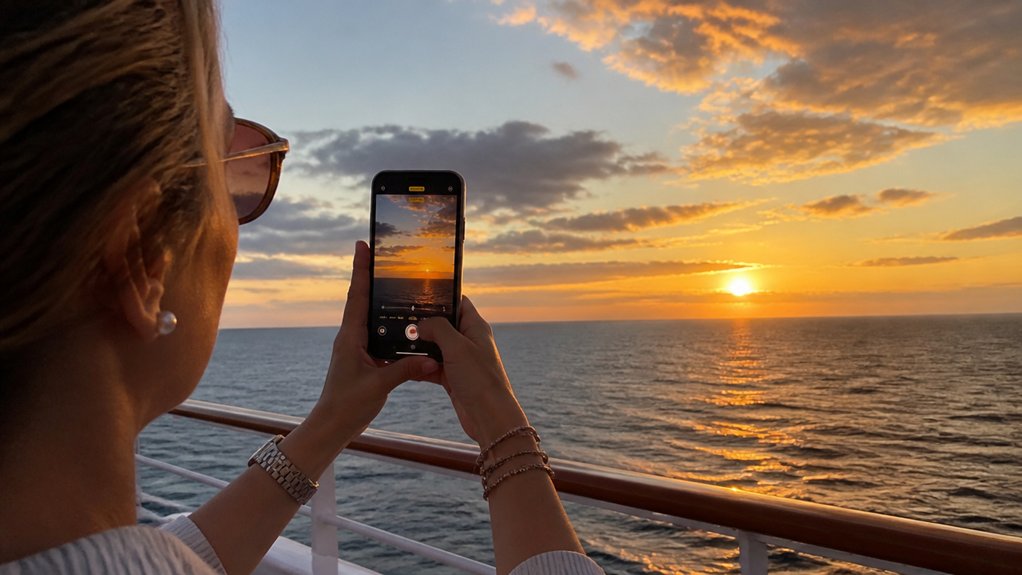
On a sunset cruise, your phone can either flatten the sky or catch that brief fire on the water. You’ll get better shots if you set up before the boat starts rocking, lower exposure a bit, and let the sky lead the scene. A few small choices matter more than fancy gear, from gridlines to HDR to when you tap the screen. The trickiest part shows up right when the sun slips lower.
Key Takeaways
- Disable HDR, meter on the sky, and lock focus/exposure to preserve sunset color and prevent blown highlights.
- Lower exposure by 1–2 stops, starting near EV -0.7, and test darker in 0.3-stop steps.
- Keep ISO around 100–200 when manual controls are available to reduce noise and maintain cleaner sunset shots.
- Use a wide lens for sea-and-sky scenes, avoid digital zoom, and shoot low near the rail for stronger composition.
- Start shooting 20–30 minutes before sunset and continue into blue hour, adjusting exposure slightly brighter as light fades.
Set Up Your Phone for Sunset Cruise Photos
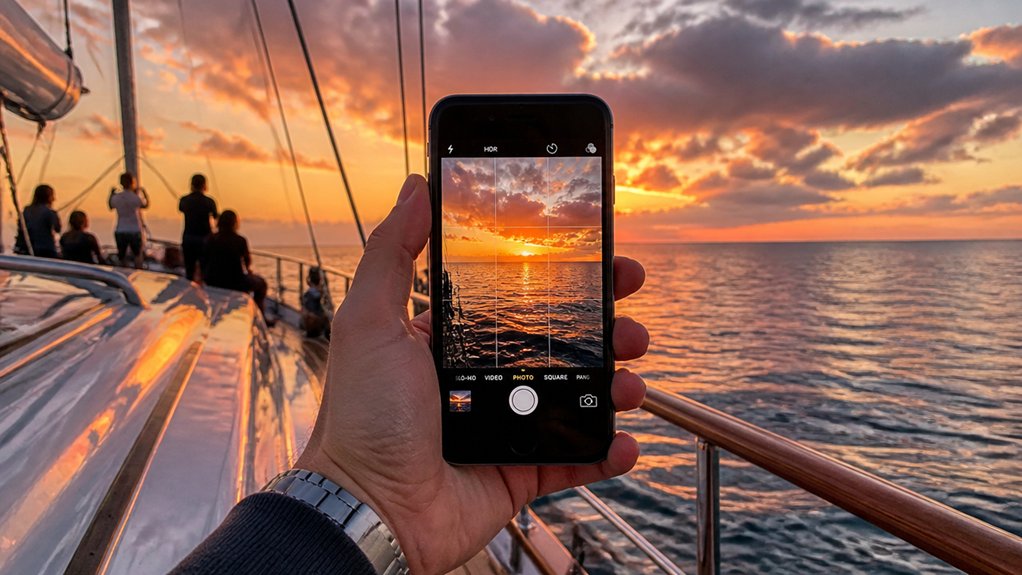
Start with a quick tune-up before the sky turns electric. Open your default camera and switch on gridlines in 4:3 or 3:2. You’ll keep the horizon straight and place the sea on a lower third while the sky claims two-thirds of the frame. That simple layout gives Sunset Photos more balance and breathing room. Use the wide-angle lens for big water-and-cloud scenes, then switch to telephoto when a boat lines up neatly with the sun. Avoid digital zoom if you can. Tap and hold to lock focus and exposure so the phone doesn’t keep hunting as the deck sways. For catamaran shots, try shooting low near the rail to emphasize the boat, water, and glowing sky in one frame. Arrive early, watch the color shift, and keep screen brightness moderate so your dynamic range judgment stays honest on the water through twilight too.
Lower Exposure and Meter for Sky Color
As the sun drops and the water flashes gold, point your meter at the sky instead of the deck or the people beside you.
- Tap and hold the sky to lock focus and meter, then lower exposure about 1 to 2 stops.
- If your phone shows EV, start near -0.7 and test darker in 0.3 steps.
- In Open Camera, watch the histogram and keep bright highlights just left of the edge.
- Don’t trust a max-bright screen. Review at normal brightness and bracket one standard, one -1, and one -2 shot.
This makes your Sunset point and shoot frames keep richer color, smoother gradients, and water that looks molten, not pale. You’ll keep detail while the boat hums and the wake chops silver below rail. For action moments on deck, GoPro tips can also help you capture steadier catamaran cruise footage as the light fades.
Skip HDR and Hide the Sun
Turn HDR off before the sky lights up, because your phone’s clever processing often flattens the contrast that makes a sunset feel electric. In your camera app, Disable HDR, then tap-and-hold lock focus on the bright sky. Slide exposure down so colors stay deep and the boat becomes a crisp silhouette. Hide the sun behind a mast or sail to tame flare and blown highlights. If your Android offers manual controls, use spot metering in Open Camera and keep ISO around 100 or 200. You’ll hold texture in the clouds and the water won’t turn into a shiny white plate at sunset from deck. To make handheld clips feel more cinematic while you shoot, brace yourself and use smooth boat footage techniques to reduce deck shake and sudden sway.
| Move | Why |
|---|---|
| Disable HDR | Keeps contrast punchy |
| Lock focus | Stops hunting |
| Lower exposure | Saves saturated color |
| Hide sun | Reduces flare |
Shoot Before Sunset and Into Blue Hour
If you usually pack up when the sun touches the horizon, stay on deck a little longer, because the best color often arrives 20 to 30 minutes before sunset and keeps building for another 20 to 30 minutes after it slips below the water. On a Waikiki sunset cruise, this longer shooting window is especially useful because open-water views keep the horizon clear as the light changes.
- Start your camera early. A good sunset warms fast, and the deck light changes by the minute.
- Dial exposure down 1 to 2 stops, then lift it slightly so frames stay properly exposed as the light fades.
- Lock focus and exposure on the sky, then recompose for crisp silhouettes and cleaner color.
- Keep ISO under 200, switch HDR off unless shadows matter, brace the phone, and keep shooting into blue hour. Burst frames for insurance on rocking water at dusk.
Frequently Asked Questions
How Do I Protect My Phone From Sea Spray on a Cruise?
Protect your phone from sea spray by sealing it in a waterproof pouch, adding a silicone case and screen protector, wiping off salt often, and storing desiccant packets nearby so you’ll prevent moisture damage aboard.
Should I Use Portrait Mode for People During Sunset Photos?
Yes, but use it like salt: sparingly. During golden hour, you’ll keep skin tones natural with backlight control, but Portrait can overdo the bokeh effect and mute sunset colors; use regular mode for groups or skies.
What Editing Apps Work Best for Enhancing Cruise Sunset Images?
You’ll get the best results with Lightroom Mobile, Snapseed Tools, VSCO Presets, and TouchRetouch Techniques: you can refine exposure, deepen colors, add cinematic warmth, remove distractions, and keep your cruise sunset images vivid and polished.
How Can I Keep My Phone Steady Without a Tripod Onboard?
Want sharper shots instantly? Use a hand brace on the railing, plant a wide stance, and wedge yourself with a seat anchor. Add a weighted case, tuck elbows, exhale, and use your timer, you’ll cut blur.
What Camera Accessories Are Useful for Sunset Cruise Photography?
Bring lens attachments, polarizing filters, waterproof cases, and portable lights; you’ll cut glare, protect your phone, and brighten portraits. Add a mini-tripod, ND filter, remote shutter, and microfiber cloth so you capture steadier sunsets afloat.
Conclusion
You’ve got the setup now. Keep your phone steady against the rail, watch the soft swell, and let the sky lead the shot. Drop exposure, skip HDR, and shoot the glowing minutes before sunset slips into blue hour. You’ll catch copper clouds, dark boat silhouettes, and that brief band of violet over the water. Take a few brackets, trust your eyes, and enjoy the salty breeze while your camera does its quiet magic tonight too.


