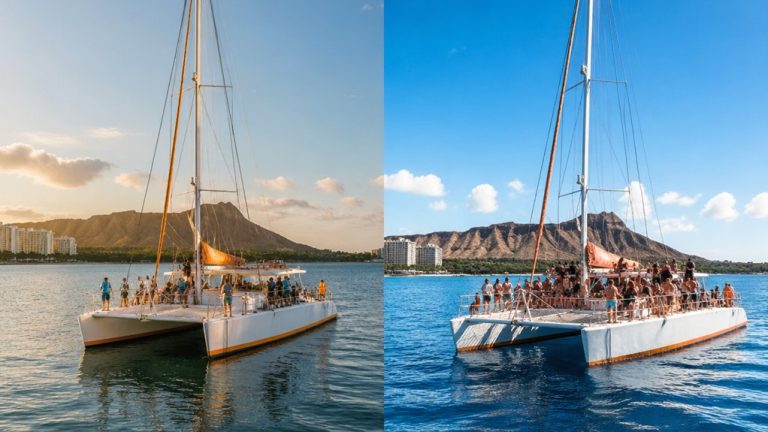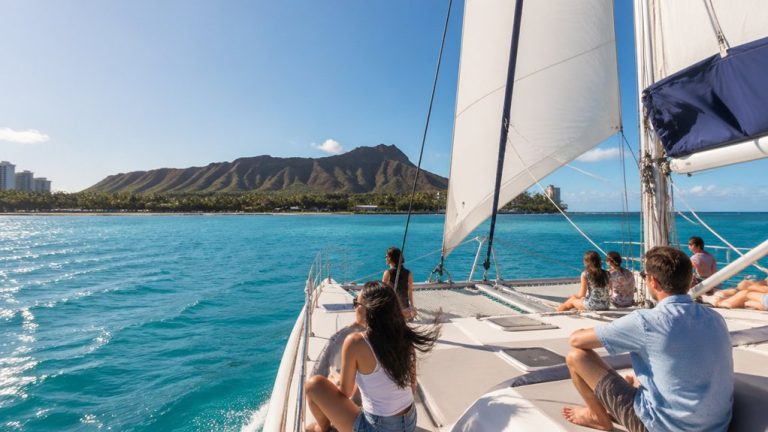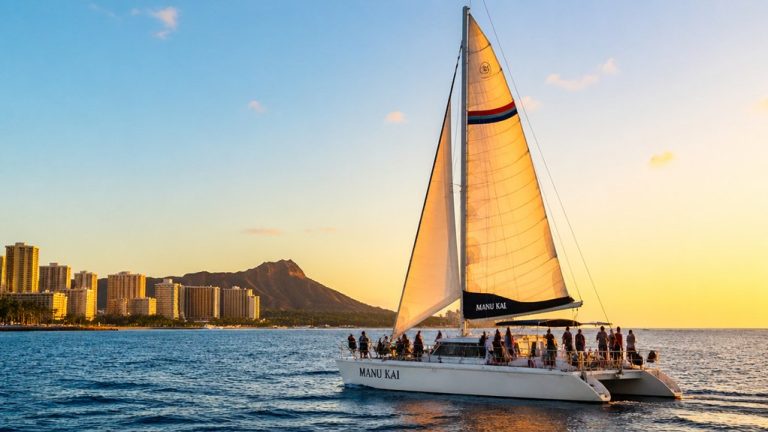
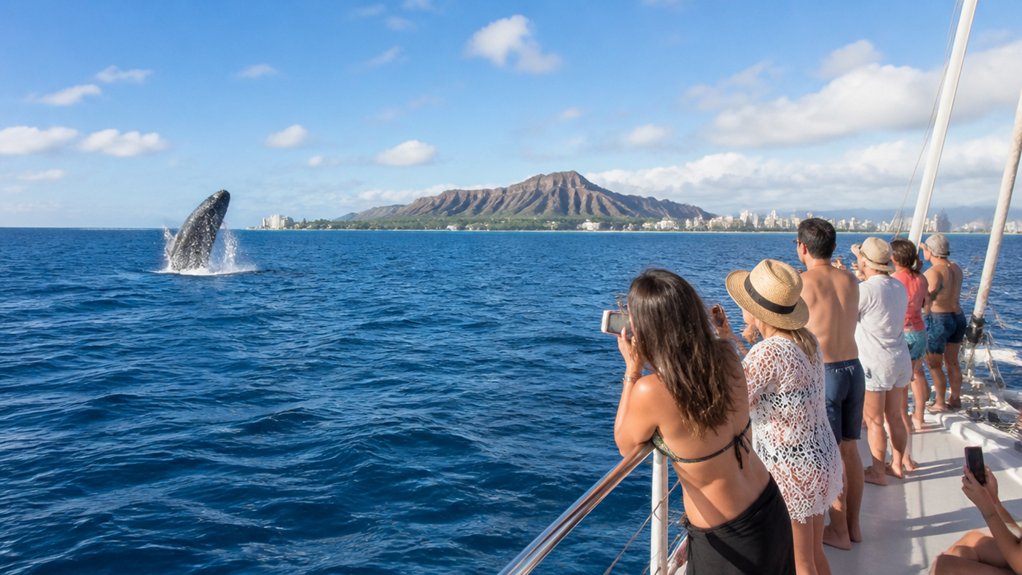
You step onto a Waikiki catamaran expecting a nice boat ride, then the horizon starts to feel alive. In winter, humpbacks often surface just offshore, and you may hear a sharp exhale before you spot a dark back rolling through blue water. The boat is usually stable, the crew keeps things easy, and the breeze smells like salt and sunscreen. But timing, cost, and even your seat choice can change the whole outing.
Key Takeaways
- Waikiki whale cruises usually last 1.5 to 2 hours on stable catamarans or sightseeing boats with shaded seating, restrooms, and drinks.
- Humpback whale season runs roughly December through March, with January and February offering the best chances of sightings.
- Expect to watch for blows, tail slaps, breaches, and mothers with calves, while encounter length and closeness vary naturally.
- Crews narrate sightings, keep respectful distances, idle near whales, and may back away if behavior suggests stress or a calf is present.
- Most tours depart from Kewalo Basin, require check-in 15 to 30 minutes early, and often offer re-ride guarantees if no whales appear.
What Is a Waikiki Whale Cruise Like?

If you book a Waikiki whale cruise in winter, your day usually starts with a quick check-in about 20 to 30 minutes before departure at Kewalo Basin or right on the beach, then a 1.5 to 2 hour ride onto open water.
On your Waikiki whale watching cruise, you’ll settle into a catamaran or sightseeing boat with breezy decks, shade, restrooms, and maybe a cold drink in hand. Crews narrate what you’re seeing and move you into viewing spots while following respectful wildlife rules. Many travelers choose a Waikiki Catamaran for whale watching because it combines open deck views with a relaxed sightseeing atmosphere. You scan for tall blows, glossy back rolls, tail lifts, and pectoral slaps. Sometimes humpback whales breach and everyone goes quiet for a beat, then laughs like they’ve seen magic before lunch. If whales stay hidden, many tours offer re-rides
When Is Whale Season in Waikiki?
Generally, whale season in Waikiki runs from early December through the end of March, when humpback whales return to Hawaiian waters and turn an ordinary boat ride into a scan for blows, tail lifts, and the occasional full-body breach.
If you’re planning Whale watching, aim for January or February, when sightings usually peak. Most tours treat December 1 through March 31 as the core whale watching season, with re-ride guarantees often tied to that window. Morning sails can bring calmer seas and lively whales. This timing also overlaps with the best time of year for catamaran cruises in Waikiki, thanks to pleasant conditions and strong chances of wildlife sightings. Book early in your stay and reserve ahead, because popular dates sell out fast. Expect rain-or-shine trips, online waivers, and check-in 15 to 30 minutes before boarding. If whales play hide-and-seek, many operators will invite you back for another sail.
Where Do Waikiki Whale Cruises Depart?
You’ll usually start your Waikiki whale cruise at Kewalo Basin Boat Harbor, where catamarans line the slips and the harbor hums before departure. Historically known as the Kukuluae‘o fishery, this harbor has long served the Ward neighborhood as a fishing and maritime hub. If you’d rather stay closer to the beach, some tours let you check in near the Outrigger Reef Hotel and catch a shuttle or take a short walk to the sand for boarding. Just plan to arrive 15 to 20 minutes early, because beach boarding can shift with the tide and boats won’t wait if you’re still hunting for your flip-flops.
Kewalo Basin Departure
From Kewalo Basin Harbor, most Waikiki whale-watching catamaran cruises head out just a short drive from the hotel zone, with many boats meeting at Slip F-28, 125 Ala Moana Blvd. You’ll usually check in 15 to 20 minutes early, then board about 10 minutes before departure for waivers and a quick safety talk. Give yourself extra time for parking, especially on weekends, since Kewalo Basin Harbor has paid on-site spaces and some nearby validation options. From Slip F, you’ll walk a short stretch to the boat and step aboard larger catamarans or double-decker sightseeing vessels. That setup often means restrooms, a bar, and dry storage, which feels especially nice if you’re traveling with kids or just prefer comfort before the ocean starts showing. Most tours use Kewalo Basin Harbor as a convenient departure point close to Waikiki.
Still comparing Whales On Waikiki Catamaran Cruises: What To Expect?
Ask for tour ideas, hotel suggestions, or a simple trip plan that combines both.
Trip Helper
Waikiki Pickup Options
In Waikiki, whale cruises often start with a simple choice: meet at Kewalo Basin Harbor or check in near the Outrigger Reef Hotel and walk to the beach launch. Most operators use Kewalo Basin, often Slip F-28 at 125 Ala Moana Blvd, while others meet near 2169 Kālia Rd. You might also get hotel lobby check-in in Waikiki, then take a short walk of about five to ten minutes before sailing.
Many Waikiki catamaran cruises set sail from these same departure areas, making pickup and boarding details especially important to confirm in advance.
Some tours add shuttle service from major Waikiki hotels, which you can usually select when you book. If you drive to the harbor, parking exists, but weekends can slow you down. Departure spots vary by company, so check your confirmation for the exact pickup location and arrival window before heading out that day.
Boarding Access Details
At the water’s edge, most Waikiki whale cruises leave either from Kewalo Basin Harbor at Slip F-28, 125 Ala Moana Blvd, or after check-in near the Outrigger Reef Hotel at 2169 Kālia Road with a short walk to the beach launch. Arrive 15 to 30 minutes early, because boarding close times can hit 5 to 10 minutes before departure. This check-in timing helps you avoid missing the safety briefing or beach transfer. Confirm your exact launch point when you book.
| Spot | What you’ll notice |
|---|---|
| Kewalo Basin | Dock boarding, parking varies |
| Outrigger beach | Sandy walk, maybe wet feet |
You may step through shallow water or climb a few stairs. Crew can help, but balance matters. Some operators offer validated parking or shuttles. Catamarans usually have open seating and restrooms. Listen for surf and rigging clinks as you board.
How Much Does a Waikiki Whale Cruise Cost?
For most travelers, a Waikiki whale cruise lands somewhere between about $45 and $120 per adult, depending on the boat, the departure time, and how many extras come with the ticket. Budget operators can sit near $45, while a Waikiki Deluxe sailing often runs from $79.95 to $99.95. If you’re bringing kids, you’ll usually pay less, often about $30 to $69.95, and infants are frequently free.
Before you book, check the fine print. Whale sightings are guaranteed on many cruises, which usually means a free return trip if the ocean stays stubbornly empty. Cancellation rules also matter. Some companies refund you if you cancel 24 to 48 hours ahead, or if weather scrubs the sail. Wait too long and your wallet feels it later.
This typical cost breakdown helps set expectations before comparing whale cruise options in Waikiki.
What’s Included on a Waikiki Whale Cruise?
When you step aboard a Waikiki whale cruise, you’ll usually get more than a seat and a view. You can expect basics like a restroom, dry storage, and reef-safe sunscreen, plus drinks such as water, soft drinks, and often a beer or cocktail while the crew points out spouts and flukes over the wind and waves. Depending on the boat, you may also get shaded seating, a steadier ride, motion-sickness aids, and even a whale-sighting guarantee that lets you try again if the whales don’t show. It’s also smart to bring a few catamaran cruise essentials like sunglasses, a hat, and a light layer to stay comfortable on the water.
Onboard Amenities
Usually, a Waikiki whale cruise gives you more than a good shot at a tail slap. Onboard, you’ll find restroom facilities, small-item dry storage, and seating that lets you choose shade or sun. Stable catamarans and double-decker boats give you room to move, lean on the rails, or watch from bow ropes with clear sightlines. You’ll likely board near the boat harbor after a quick safety orientation. Crew members explain viewing rules, manage spotting, and keep crowding down. Life jackets stay available if you need them. Many operators also stock reef-safe sunscreen and motion-sickness aid. Bring sunglasses, a hat, and a light jacket because ocean breezes can flip from silky to surprisingly cool in minutes flat while Waikiki still looks sunny from shore there. Since trip length can vary, it helps to confirm the cruise duration before you book so you know how much time you’ll have on the water.
Drinks And Extras
Settle in and you’ll likely find that the ticket covers more than the ride itself. Most Waikiki whale cruises include complimentary beverages, so you can sip water, soda, beer, or a simple mixed drink while scanning the horizon. On some boats, the first mate keeps glasses filled and the mood easy.
Many operators clearly explain alcohol included options in advance, so you’ll know whether drinks are part of the fare or available as an upgrade. You may also book a vessel with an open bar or even a premium bar, where wine, cocktails, and tropical pours join the lineup. Light snacks often appear too, from charcuterie boxes to easy bites, and some Saturday morning sails add bagels and coffee. Bring your ID if you want alcohol, since service is 21 plus and the crew watches consumption carefully. If no whales show, some operators offer a free re-ride instead of a refund.
How Early Should You Check In?

Aim to check in 15 to 30 minutes before your Waikiki catamaran cruise, because the clock moves faster once you’re near the water and boarding often closes 5 to 10 minutes before departure.
That buffer matters in Waikiki. Some operators require check-in 15 minutes early, and many suggest 20. If your tour starts at a hotel lobby, you may still need a 5 to 10 minute walk to the beach or slip. If you’re driving, parking and validation can eat extra minutes, especially on weekends. Finish any online waivers before you arrive, then be at the stated meeting spot on time for roll call. Arriving early also gives you room to settle in, stash bags, and claim a seat without doing the hurried vacation shuffle. Checking the operator’s Waikiki Catamaran Cruise FAQ before you go can help confirm the exact check-in window and boarding rules.
What Happens at Check-In and Boarding?
Arrive at the meeting point, flash your booking, and the whole outing starts to feel real. At check-in, staff confirm your waiver, point you toward the group, and make sure you’ve arrived 15-30 minutes before departure. Build in extra time for parking or a hotel lobby pickup, especially if you booked a shuttle. Then the crew gives a brisk orientation on seating, dry storage, the restroom, and safe movement on deck. You’ll hear practical rules too, like skip the drone and use a phone strap. On a Waikiki catamaran cruise, this quick briefing also helps set expectations for how the outing will unfold once you leave shore. When it’s time to board, you walk to the slip or beach, climb aboard with help, and settle in as crew later call whale positions to spread everyone out for better views and smoother photo moments all around onboard.
Who Should Skip Beach Boarding?
Beach boarding feels adventurous right away, but it isn’t the best fit for every traveler. You should skip beach boarding if you can’t step through shallow surf, keep steady on wet sand, or climb steep stairs. Travelers using wheelchairs, anyone with limited mobility, and guests recovering from lower-body surgery need another option. The same goes for medical boots, dress shoes, serious balance issues, or tiny kids who need full carry-mode. On Oahu, some operators offer accessible catamaran cruises with alternative boarding arrangements instead of beach launches.
| If this sounds like you | Better plan |
|---|---|
| You use wheelchairs or avoid uneven ground | Choose another vessel |
| Wet shoes are a no-go | Pick a dry pickup |
| Stairs, surf, or balance feel risky | Ask for alternative boarding |
A quick switch now beats an awkward wobble later, and it lets you focus on whales, not footing.
How Comfortable Is the Catamaran?
Settle in, and the surprise is how comfortable many Waikiki whale-watching catamarans feel once you’re onboard. You’ll notice stable platforms that soften the roll, so the ride usually feels steadier and kinder to uneasy stomachs. Expect covered and open-air seating, shaded spots, roomy decks, and clear sightlines that keep the ocean close without feeling cramped.
You’ll usually have restrooms, dry storage for small items, and easy drink service with water, soda, or something stronger if that’s your style. Most boats also have bathrooms onboard, which adds peace of mind on longer outings. Crew members hand out life jackets and often offer reef-safe sunscreen or motion-sickness help. Bring a light jacket and a phone strap, since wind and spray can sneak up on you. Getting aboard may mean wet feet or a few steps, but staff usually help out quickly.
Where Should You Sit for the Best Views?
Where you sit can shape the whole cruise, especially when a whale surfaces close enough to make everyone grab the rail at once. Choose edge seats along the rail or front ropes if you want unobstructed panoramas and a front-row seat when a spout erupts nearby. Those spots also give you larger under-seat cubbies. If you’d rather shoot photos without the boat bouncing through every frame, pick a middle seat for steadier views and less crowding. Stay near crew-designated viewing directions so you can pivot fast when bearings change. If motion gets to you, sit midship on the lower centerline for the smoothest ride. Check in early too. On smaller trips, edge seats disappear first, almost faster than you can say tail slap today. While whales are the main attraction, some cruises also report dolphin sightings off Waikiki, adding another wildlife bonus to your view.
What Should You Bring Whale Watching?
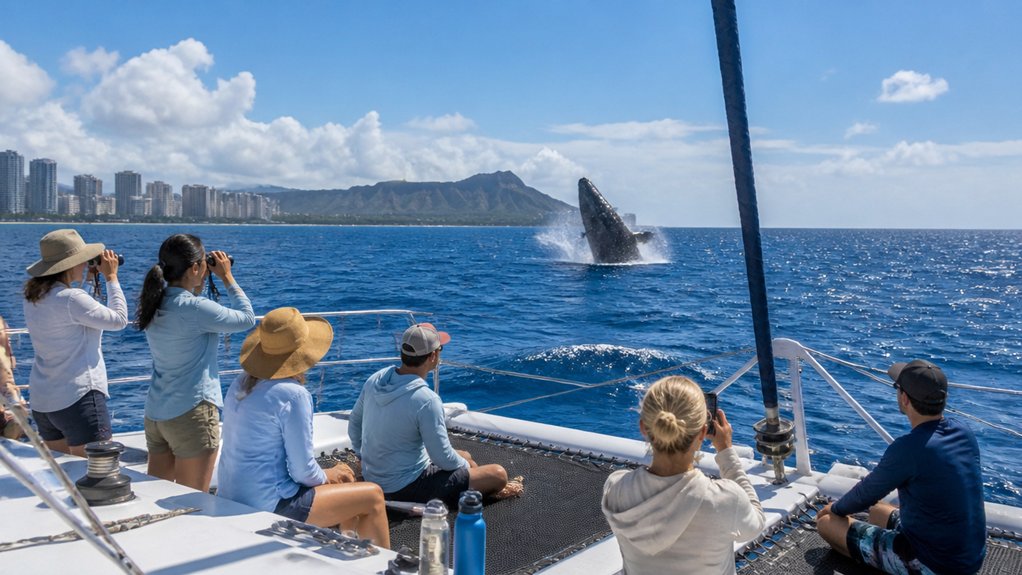
You’ll want reef-safe sunscreen, a hat, polarized sunglasses, and a light layer, because the Waikiki sun hits hard and the catamaran can get windy with a little salt spray. Bring a refillable water bottle, any motion-sickness meds you count on, and a phone strap or camera with extra battery or storage so you’re ready when a whale shows up fast. Keep it simple with slip-on shoes and leave drones, glass bottles, and bulky beach bags at the hotel, since easy boarding matters and nobody wants to wrestle a giant tote at the shoreline. If you’re unsure what works best, think in terms of catamaran cruise outfits that are breathable, sun-smart, and easy to move around in.
Sun And Spray Essentials
Often, the biggest surprise on a whale watch isn’t the whale. It’s how bright the sun feels and how cool spray lands on your skin. Bring reef-safe broad-spectrum sunscreen, a wide-brim hat, and sunglasses. Pack a light waterproof jacket too. Afternoon breezes can sneak up on you. On a Waikiki catamaran cruise, you’ll also want to stay ready to enjoy the scenery between whale sightings.
| Item | What you notice | Why it matters |
|---|---|---|
| Hat and shades | White glare skimming the waves | You keep spotting spouts |
| Strap and dry case | Slick rails, salty mist, quick photos | Your phone stays with you |
Clip a wrist or neck strap to your phone or camera. A waterproof case or GoPro helps near splashy bow nets. Carry a reusable water bottle. Leave drones, glass, and bulky bags behind. Small onboard storage handles wallets, phones, and extra sunscreen just fine.
Motion Comfort Must-Haves
Sun and spray get your attention fast, but the boat’s motion can shape the whole trip. If you’re sensitive to swell, take motion-sickness meds 30–60 minutes before boarding so queasiness doesn’t sneak up mid-sail. A lightweight windproof jacket or long-sleeve layer helps when afternoon breezes cool off and salt spray lands on your skin. For a steadier ride, aim for a mid-deck or lower-center seat near the stabilized area. Choosing a spot with less motion can also make catamaran cruises in Waikiki more comfortable if you’re prone to seasickness. Wear non-slip shoes that handle beach boarding and quick deck moves. Add sunglasses, reef-safe sunscreen, a camera strap, and a small dry bag or use onboard dry storage. Your stomach, gear, and eyes will thank you when the first whale splash steals your focus anyway. Even stable catamarans can bob enough to surprise confident first-timers.
What To Leave Behind
For a smoother ride, pack light and leave the awkward stuff at the hotel. Skip drones, glass bottles, and bulky beach bags. Drones aren’t allowed, and big or breakable items are hard to stash once you’re underway. Bring a reusable water bottle instead, and count on small dry storage for your phone, keys, and wallet.
What should stay in your bag? Reef-safe sunscreen, sunglasses, and a hat, because sun and salt spray sneak up fast. A light jacket helps when the breeze turns cool. If motion gets to you, take seasickness medication before boarding. Bring a camera or phone with a strap, extra battery, and fast SD card. The best whale shots come when you wait, hold steady, and let the ocean put on the show for you. Forecasts can also help you pack smarter, especially when Small Craft Advisory conditions or building seas are expected in Hawaiian coastal waters.
What Whales and Behaviors Might You See?
Usually, your first clue is a tall misty blow rising off the water, sometimes as high as 30 feet, followed by the smooth black roll of a humpback’s back near Waikiki.
Whale watching here can surprise you. One minute you catch brief blows. Next, you’re watching tail slaps, pectoral fin waves, spy-hopping, or a full breach that gets everyone clapping.
For everyone’s safety, boats should keep a 100-yard distance from humpback whales and travel more cautiously during whale season.
| What you spot | What it means |
|---|---|
| Mother with calf | Tender, slow travel |
| Breach or tail lift | Big energy at the surface |
Most winter cruises focus on humpbacks during Dec–Mar. Some encounters last minutes and feel wonderfully close. Others stay brief, because whales are wild, not scheduled performers. If you don’t see one, some operators offer a free re-ride. Stay alert for another blow, because the ocean loves a slow reveal, and your camera may suddenly have a very large, wet subject.
How Do Crews View Whales Responsibly?
You’ll notice responsible crews keep a respectful distance, often easing to idle and holding steady so you can watch without pushing into a whale’s space. Instead of chasing, they read blows and tail lifts early, then position the catamaran for a brief look that feels calm, balanced, and surprisingly quiet. When a calf appears, you can expect extra caution right away, because the best crews put the little one’s safety first and let the moment come to you.
Respectful Viewing Distance
Distance is the quiet rule that makes whale watching feel both thrilling and respectful. On Waikiki catamaran cruises, you watch humpbacks from a Respectful distance, usually about 100 to 300 yards, and farther when calves are nearby. That space protects mothers and young and lets you see natural behavior instead of stressed reactions. For Whale Watching, crews slow down, hold a steady line, and skip sudden turns or throttle changes. Spotters scan the water while captains coordinate with nearby boats so nobody crowds the same side. If a whale surfaces close by, engines drop to neutral, the deck settles, and you stay seated and quiet. You hear the wind, the slap of water, maybe a breathy exhale, and the moment feels earned, not staged.
No Chasing Whales
That respectful space matters most in what crews don’t do next: they don’t chase. On a good Whale watching trip, you’ll notice crew members work with patience, not pressure. They slow down, hold a steady line, and let the ocean decide the encounter.
- You’ll hear calm calls about direction and distance, so everyone shifts for a fair view without piling onto one rail.
- The captain repositions smoothly instead of circling or making sharp turns, which keeps noise and wake lower.
- If a whale dives long, changes course fast, or seems unsettled, the boat backs off right away.
That eco-first rhythm feels thoughtful and quietly exciting. You’re not hunting a close-up. You’re watching wild animals choose the moment, which is better anyway for you too.
Calf-First Caution
Often, the whole mood changes when a calf comes into view. You notice the captain ease to idle, and everyone gets quieter. That’s calf-first caution in action. Crews keep greater distances, avoid sudden turns, and reposition only at the whales’ pace. They call out boat distancing and spread passengers around the deck, so no one side crowds the rail. Engines stay low. Music stays off. Even excited chatter drops when a mother and calf are resting or nursing nearby. With skilled lookouts and a stabilized platform, you can still get a steady view without pressing closer. If the calf seems distressed, or the mother gets defensive, crews back off fast. Your photos can wait. The whales’ welfare comes first, always, out here on Waikiki.
What If You Don’t See Any Whales?
Miss the whales on your first cruise, and you usually won’t go home empty-handed. Most Waikiki operators offer a complimentary re-ride during whale season instead of a full refund, so disappointment rarely lasts long.
No whales on the first pass? In Waikiki, a complimentary re-ride usually keeps the story from ending there.
- Ask how the crew defines a sighting. A distant blow may count, not just a tail slap or breach.
- Check the re-ride rules before you leave the dock. You may need office validation, same-season use, and a specific afternoon sailing.
- If weather turns rough or the passenger minimum falls short, you’ll usually get a full refund or a new date.
It’s a practical system with a little suspense built in. Even when whales ghost the horizon, the trade winds, salt spray, and watchful scans keep the cruise lively for you.
When Should You Book Your Cruise?
Usually, the best move is to book your whale cruise early in your trip and well before March 31, while whale season is still in full swing. Most travelers reserve about 37 days ahead, and popular 3:00 pm sails can sell out fast, so book early. If you can, choose a morning departure like an 8:00 am sail. Reviewers often report livelier whale behavior then, though afternoons still deliver memorable sightings. In March, booking early in your stay gives you room to reschedule or use a complimentary re-sail if weather turns or whales stay hidden. Check whether you’ll depart from Kewalo Basin Slip F-28 or Outrigger Reef at 2169 Kalia Road, then arrive 15 to 30 minutes early. If you get queasy, pick a catamaran.
Frequently Asked Questions
Is There Parking Available Near the Departure Area?
Yes, you’ll usually find paid parking near the departure area, but it fills fast. Ask about Valet parking validation, check Street meters and arrive fifteen to twenty minutes early or choose pickup to skip hassles.
Are Children Allowed, and Is There a Minimum Age?
Yes, shockingly, kids are welcome, and most cruises don’t set a minimum age. You’ll get free infant fares, child friendly seating, and limited stroller access, but you must supervise during beach boarding and on deck.
What Is the Cancellation or Refund Policy?
You’ll usually get a full refund if you cancel 24–48 hours ahead; inside that window, you likely won’t. Weather cancellations refund you or let you rebook. Ask about refund timelines, ticket transfers, and no-sighting re-rides.
Do Cruises Operate in Rainy or Rough Weather?
Yes, you’ll usually cruise in rain, but operators won’t sail in dangerous rough seas. You should expect safety protocols to guide cancellations or early returns, and you’ll still follow viewing etiquette whenever conditions allow watching.
Can You Book the Catamaran for Private Events?
Yes, private charters turn your plans into a breezy, beautiful bash for birthdays, weddings, and corporate outings. You’ll usually call the operator, share your date, group size, and requests, then confirm pricing, deposits, amenities, and availability.
Conclusion
When you step aboard in Waikiki, you’re signing up for one of Hawaii’s nicer surprises. You scan blue water, grip a sun-warm rail, and listen for that soft whoosh that means the big visitors have decided to say hello. Book in peak season, arrive early, and check the sighting policy before you go. Then let the trade winds do the rest. If the whales play hard to get, you’ve still earned a morning at sea.