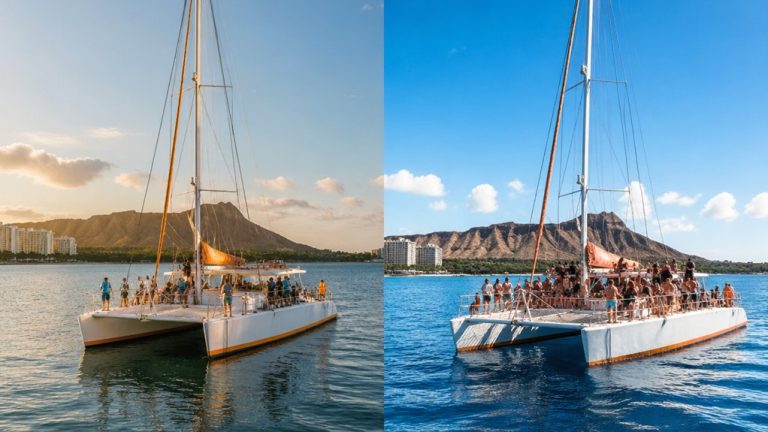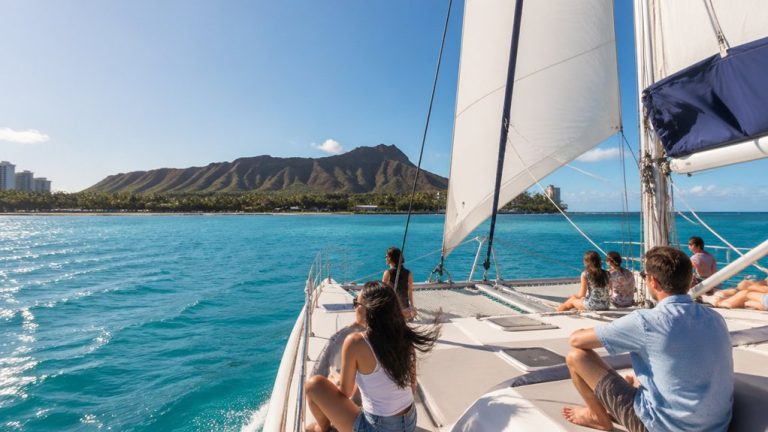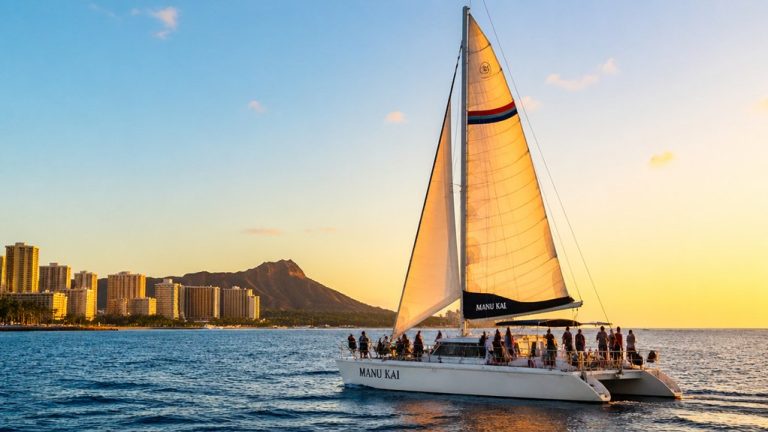

You step onto a Waikiki catamaran in the morning, feel the trade wind lift, and watch the skyline slide past toward Diamond Head. The boat stays steady, the bow nets beckon, and a naturalist points out spouts before you spot them yourself. Then the hydrophone drops, and whale song rises through the deck like a low, eerie hum. It sounds simple, but a few details can make this cruise much better.
Key Takeaways
- Waikiki catamaran whale-watching cruises run December through April, when migrating humpback whales are most often seen offshore.
- Most trips depart from Ala Wai or Kewalo Basin and follow the Waikiki coastline toward Diamond Head.
- Cruises typically last about two hours, often starting around 8:00 AM for calm morning viewing.
- Stable catamarans offer shaded seating, bow net lounges, restrooms, and hydrophones to hear whale songs underwater.
- Naturalist-guided small-group tours may spot breaches, tail slaps, and mother-calf pairs, often with a whale-sighting return guarantee.
What Is the Waikiki Catamaran Whale Watch?

Think of the Waikiki Catamaran Whale Watch as Oahu’s front-row seat to humpback season. From December through April, you’ll join a guided excursion that heads out from Ala Wai or Kewalo Basin Harbor and tracks the Waikiki coastline toward Diamond Head. This is Whale Watching with a little science and a lot of sea breeze. Naturalists and crew scan for spouts, tails, fins, and breaches as migrating humpback whales pass offshore. They drop hydrophones into the water so you can hear whale songs that sound eerie and beautiful. Daily sailings use stable catamarans and keep the mood intimate. If whales play hide-and-seek, the whale-sighting guarantee usually gets you a complimentary return trip, subject to availability. You’ll feel close to the ocean without losing the city entirely. Many cruises are designed around humpback season, when sightings are most likely and the offshore waters become especially active.
What Does the Waikiki Whale Watch Include?
Set out in the morning and you’ll get about two hours on the water, usually with an 8:00 AM departure, cruising the Waikiki coastline toward Diamond Head during whale season from December through April. On this Waikiki whale watching catamaran cruise, you ride a stable boat with front-row bow net lounges, a shaded Bimini, cushioned seats, and a restroom. Naturalist commentary and local crew help you spot humpback whales, from spouts and tail slaps to fins, breaches, and mother-calf pairs. Hydrophones may let you hear whale songs under the hull, which feels wonderfully surreal before coffee fully kicks in. You’ll also get a whale-sighting guarantee, plus a family-friendly BYOB policy. Some operators add snorkel/turtle options on other trips, but this cruise stays focused on whales. The best time of year for this experience is during Waikiki’s whale season, when humpback sightings are most likely.
Is This Waikiki Whale Watch Worth It?
For many travelers, this Waikiki whale watch earns its spot on the itinerary because it packs a lot into a short morning on the water. You get Waikiki Whale Watching during peak season, a catamaran cruise with front-row viewing, and a hydrophone that lets you hear humpback whales sing below the hull.
That mix makes the honolulu/oahu departure feel easy and memorable. A small-group experience gives you more space to scan the water and ask questions, while crews follow conservation guidelines that keep the encounter respectful. Operators also remind guests to respect the sanctuary’s 100-yard distance guidance when viewing humpback whales. Prices range from budget-friendly to splurge-lite, and the whale-sighting guarantee lowers the risk if nature stays quiet. If you want a calm alternative to a sunset cruise, this one delivers sea breeze, open decks, and a very good chance of spotting giants.
Frequently Asked Questions
Where Do Waikiki Catamaran Whale Watch Cruises Depart From?
They depart from Waikiki departure sites near Kewalo origins at the Harbor location. You’ll confirm Pier pickup, Waikiki marina, Boat boarding, Meetup point, Cruise commencement, Catamaran launch, and Departure schedule when you book online ahead.
Is Parking Available Near Kewalo Basin?
Yes, over 300 spaces give you parking options: street meters, paid garages, drop off zones, park and ride, short term lots, residential parking, overnight rules, event parking, and bicycle parking; you’ll find choices near Kewalo Basin.
Is the Catamaran Wheelchair Accessible?
Yes, you’ll have wheelchair access with accessible boarding, aisle width, restroom accessibility, ramps availability, seat accommodations, companion seating, elevator presence, crew assistance, and sensory accessibility, though you’d confirm specifics directly before booking, since setups vary.
What Should I Bring on the Whale Watching Cruise?
Bring Sunscreen essentials, Layered clothing, a Water bottle, Motion remedies, a Sun hat, Light snacks, ID essentials, Binoculars recommendation, Camera protection, and a Reusable bag; you’ll stay comfortable, prepared, and ready for unforgettable whale sightings.
What Happens if I Get Seasick During the Tour?
If you get seasick, you’ll use antiemetic options, ginger remedies, fresh air, designated seating, and stabilization techniques; request crew assistance, access onboard amenities, follow medical protocol, and take discreet exits to manage motion sickness quickly.
Conclusion
If you want an easy ocean outing with real wonder, this Waikiki catamaran whale watch earns its spot. You board, settle into shaded seats or the bow net, and scan the blue water off Diamond Head. A humpback song can travel about 10 miles underwater, which makes the hydrophone moment feel even wilder. In two relaxed hours, you get salt air, skyline views, and a solid chance to meet Hawaii’s winter giants without doing anything harder than showing up.