

Like Odysseus with better sunscreen, you’ll enjoy a catamaran more when you know the small rules that keep life smooth at sea. You’ll pack a soft bag, listen when the skipper talks, slip your shoes into the basket, and keep your wake and your volume low after dark. These habits seem simple, but once the anchor drops and the deck starts to glow, a few smart choices matter even more.
Key Takeaways
- Pack light in a soft duffel, submit forms early, and tell the crew about allergies, medications, or mobility needs before boarding.
- Attend the safety briefing, know where emergency gear is, and wear life jackets correctly whenever the skipper instructs.
- Respect the yacht as a shared workspace by following crew instructions, avoiding private areas, and keeping noise low, especially at night.
- Minimize wake, follow right-of-way rules, and give larger commercial vessels extra room because they turn slowly.
- Enter harbours and anchorages slowly, avoid channels and fragile seabeds, and keep safe anchor spacing with proper scope.
Prepare for Your Catamaran Cruise
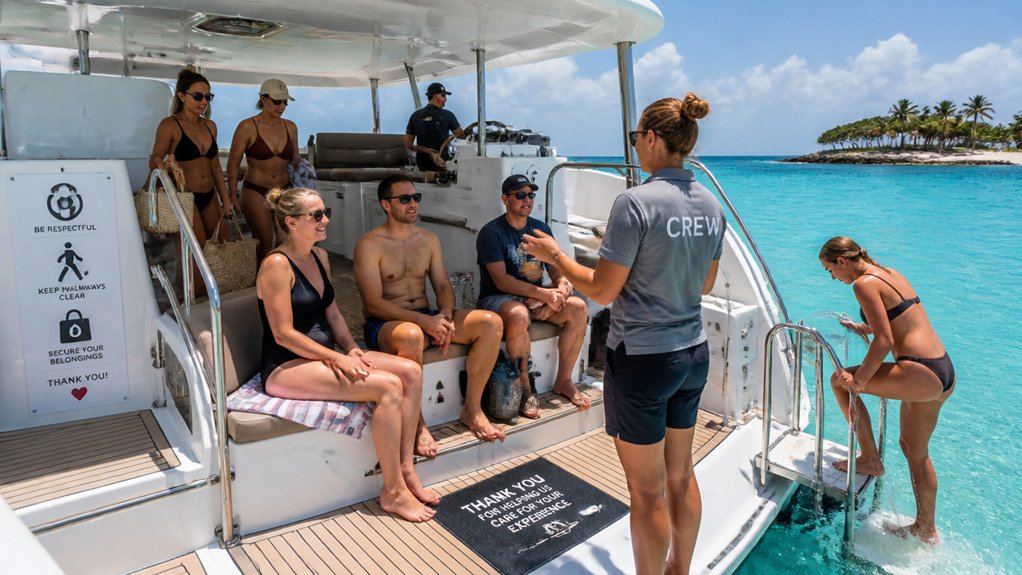
Before you step onto the catamaran, set yourself up for an easy first day on board. Pack only essential gear in one soft duffel, not a hard suitcase, so it slides into tight lockers without a wrestling match. Send medical or preference forms early, and tell crew members about allergies, medications, or mobility limits. Your charter broker can help make sure nothing gets missed before boarding. For a smooth check-in timing, plan to arrive early enough to complete boarding steps without feeling rushed. On deck, wear non-marking soft-soled shoes or go barefoot, and leave street shoes in the gangway basket. Once aboard, review the safety briefing and emergency procedures. Make certain you know where life jackets, extinguishers, and the radio are kept. Then agree on basic onboard rules for smoking, drinks, quiet hours, and water use. That prep keeps day one stress-free.
Respect Crew, Space, and Onboard Rules
Once the bags are stowed and the safety talk is done, good catamaran manners come down to reading the boat and respecting the people who keep it running. On any Charter, respect crew by treating the yacht like someone’s workplace, because it is. Follow the skipper’s instructions and safety guidelines without debate. A careful listen during the safety talk helps everyone understand catamaran cruise safety essentials before the trip gets underway. Honor crew privacy. Skip crew cabins and the galley unless you’re invited. Use the shoe basket, keep waste overboard out of the picture, and watch noise levels after dark and in harbour. Take short showers and save fresh water for everyone. Share meal requests or activity plans before departure, then offer feedback kindly at the end. For gratuity, give 10 to 20 percent of the charter fee to the captain, unless told otherwise.
Follow Safety and Right-of-Way Rules
While a catamaran feels relaxed and roomy, the water still asks you to pay attention. You should wear a properly fitted life jacket when told, and make certain the safety of kids by checking every buckle. You also maintain a proper lookout. Eyes scan buoys, swimmers, squalls, and that fast dinghy sneaking by. In Hawaiian coastal waters, watch for Small Craft Advisory periods and rapidly building seas ahead of a cold front.
| Do | Why |
|---|---|
| observe COLREGs | Predictable moves matter |
| give way to starboard | Crossings stay calm |
| reduce speed and create minimal wake | Shorelines and stomachs thank you |
| allow larger commercial vessels extra space | They turn slowly |
| use clear communication and check swing radius | Crowded water hates surprises |
Use hand signals or VHF. Stay alert. Salt air is lovely, but rules keep the day lovely too. Overtaking boats keep clear, and sail usually beats power.
Dock and Anchor Considerately
Good seamanship doesn’t stop at right-of-way; it follows you into the harbor and out to the anchorage. When you enter harbours slowly, you spare nearby hulls the slap of wake and keep shorelines calm. In busy anchorages, allow ample space. Leave at least twice the first boat’s swing radius so wind or tide won’t turn dinner into bumper boats. Avoid marked channels, shipping lanes, and fragile grass or reef. Pick sand when you can. Once you drop, monitor anchor set and check your anchor scope, aiming for 5:1 to 7:1 as conditions build. Then check again after dark for drag. Near a marina or raft-up, communicate intentions by radio or hand signals, and offer assistance with lines or fenders when a crew looks short-handed. At Kewalo Basin Harbor, respecting the harbor’s role in the Ward Village community means docking with extra care around working waterfront activity and public spaces.
Frequently Asked Questions
Can I Bring My Own Food and Drinks Onboard?
Yes, you can bring snacks and BYO beverages if your charter allows it; ask about licensed alcohol, corkage policies, coolers allowed, dietary restrictions, sealed containers, packed picnic limits, and trash disposal before boarding with crew.
Is Wi-Fi Usually Available on a Catamaran Cruise?
Usually, you’ll get Wi‑Fi availability, but expect Coverage gaps offshore. Check Signal strength, Speed expectations, Data limits, Cost options, Device compatibility, Onboard hotspots, and Satellite connectivity before booking, because service varies by route and providers.
Are Pets Allowed on Catamaran Charters?
Yes, like a well-trained first mate, your pet can sail if you confirm pet policy, breed restrictions, size limits, onboard safety, leash rules, sleeping arrangements, allergy considerations, health certificates, and cleanup responsibilities before you book.
Can I Use a Drone During the Cruise?
Yes, if you’ve got permission and follow drone regulations, local permits, airspace restrictions, launch zones, privacy concerns, insurance requirements, preflight checks, propeller guards, and battery disposal rules while staying clear during maneuvers and near wildlife.
What Should I Do if I Get Seasick?
Take motion sickness medication with proper medication timing, use natural remedies and acupressure bands, choose cabin positioning, get fresh air, practice gaze fixation, follow hydration strategies, and ask for crew assistance if symptoms don’t ease.
Conclusion
You’ll get more from a catamaran cruise when you pack smart, listen well, and move with the boat instead of against it. Stow your shoes, mind the wake, and treat crew space like a backstage door. Speak up about plans or allergies early. At anchor, keep voices low and eyes open for swimmers and shorebirds. Do that, and the trip unfolds like a clean sail in steady wind, easy on everyone and far more fun.


