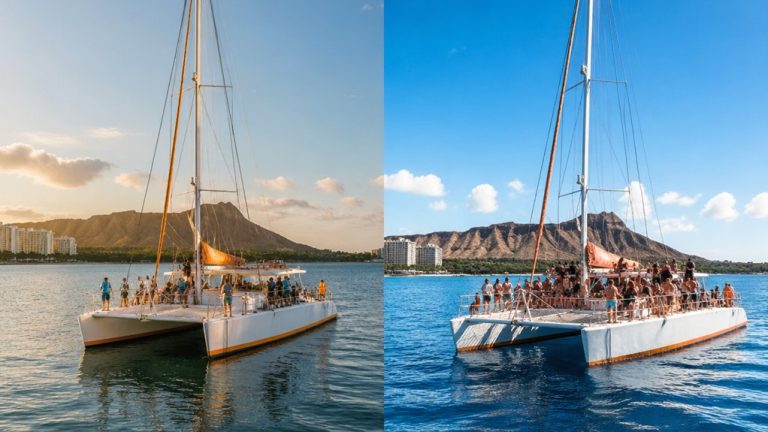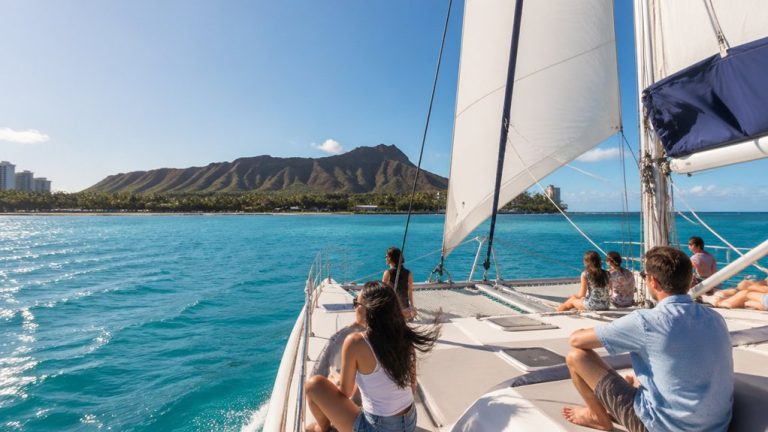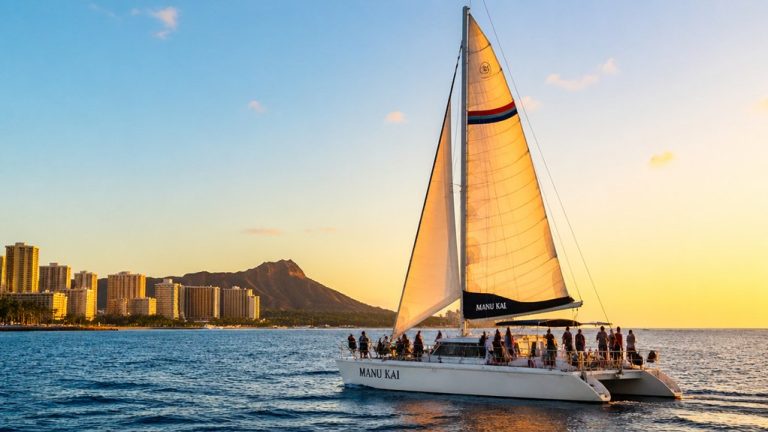
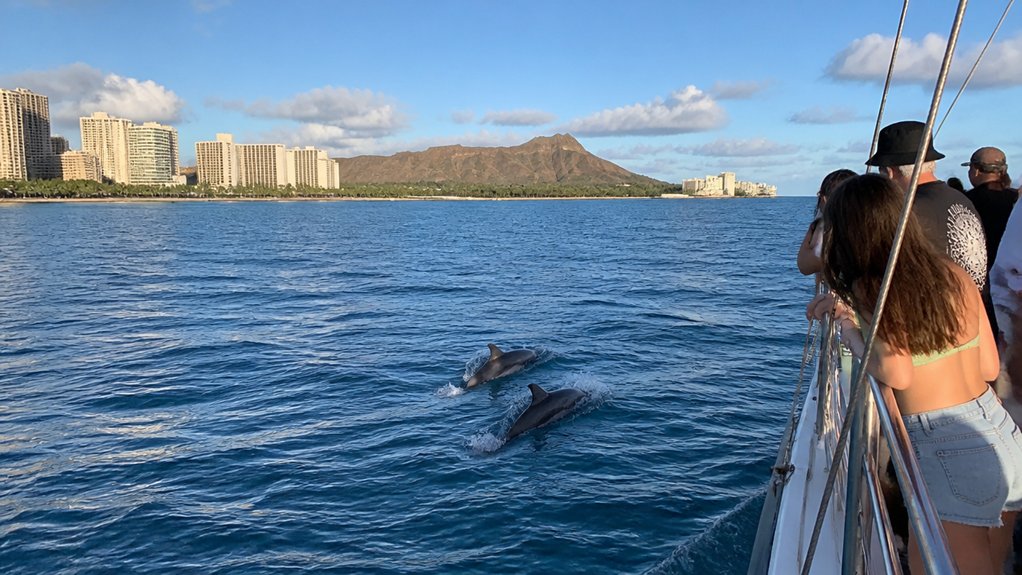
If you book a Waikiki catamaran and hope for dolphins, you should treat them like a lucky cameo, not the main act. Most short sails skim the calm blue water off the hotels, where spinner dolphins don’t often linger. Your odds get better on early departures, longer westbound runs, and glassier summer mornings when the horizon looks almost painted. Still, the route, the wind, and a sharp-eyed crew can change everything.
Key Takeaways
- Dolphins are uncommon on standard Waikīkī catamaran cruises, and sightings should be considered a bonus, not an expectation.
- Early-morning departures offer the best chance, especially from May through August when seas are calmer and visibility improves.
- Spinner dolphins are the most likely species offshore, while bottlenose and spotted dolphins are seen less often.
- Quick beach-hugging Waikīkī loops rarely reach productive dolphin habitat; longer westbound offshore routes improve the odds.
- West Oʻahu departures, especially from Waiʻanae or near Electric Beach, are generally far more reliable than Waikīkī shoreline cruises.
How Often Do Waikiki Cruises See Dolphins?
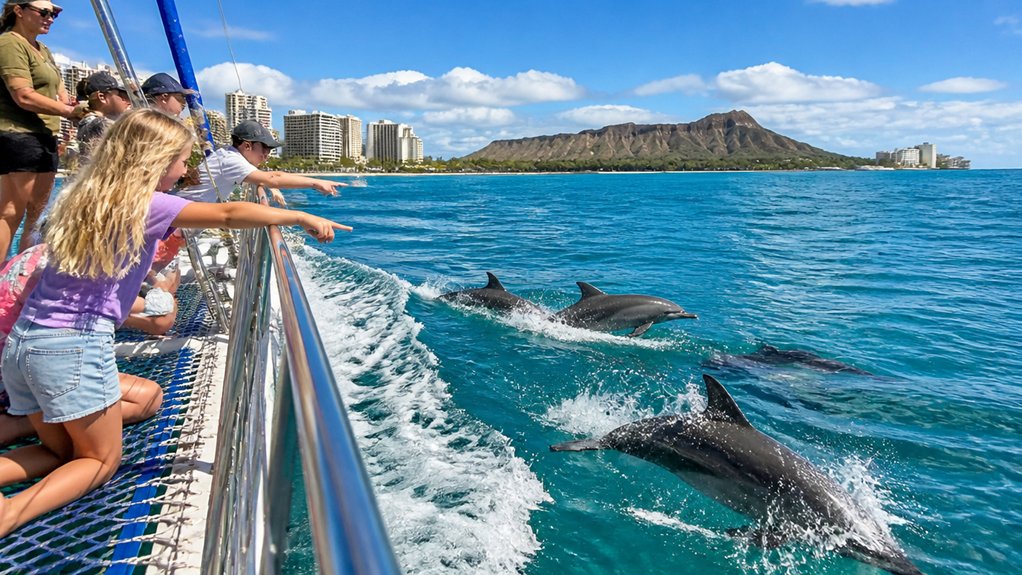
Usually, Waikiki catamaran cruises don’t see dolphins very often. You’ll spend most sails gliding along calm, inshore water where pelagic dolphins rarely linger. That’s why crews won’t promise sightings, even on beautiful blue-sky days.
Still, you’ve got a small shot at spotting dolphins in the wild if you book an early-morning departure and travel during calmer months from May through August. This lines up with morning cruises often having the calmest ocean conditions in Waikiki. Sunrise light can make the ocean look polished, and active pods sometimes pass closer to shore.
If dolphins top your wish list, choose a tour that heads toward the west coast or leaves from dolphin-focused harbors. Those routes reach better habitat and raise your odds far more than a standard Waikiki leisure cruise. Think of a sighting here as a bonus, not plan.
Which Dolphins Are Most Common Off Waikiki?
If you’re hoping for the most likely dolphin off Waikīkī, spinner dolphins lead the list, especially when your catamaran heads west toward deeper offshore water instead of hugging the beach. Right off the Waikīkī shoreline, sightings can be hit or miss, so you’ll want a bit of luck along with your sunscreen and camera. Go farther toward West Oʻahu, and you may also spot bottlenose or seasonal spotted dolphins, which gives the water a mixed-cast feel with every swell and sea-spray pass. While some cruises are also known for whale watching, dolphin sightings off Waikīkī remain less predictable and depend heavily on route and season.
Spinner Dolphins Offshore
Often, the dolphins you’re most likely to spot off Waikīkī are spinner dolphins, the quick silver acrobats that love to ride a catamaran’s bow wave and burst into the air in tight, spinning jumps. Head west and you’ll have your best shot. Morning and midday cruises match their offshore moves from nighttime feeding grounds. You may see a few or a few dozen. On some outings, crews also keep an eye out for sea turtles surfacing near the catamaran.
| Clue | What you notice |
|---|---|
| Time | Early morning, midday |
| Pod size | Few to dozens |
| Seas | Calmer May to August |
Their spins make identification easy from a boat. You’ll hear quick breaths, see flashes of gray backs, and watch them zip beside the hull like they own the tour out there.
Waikiki Sightings Rarity
While dolphins do show up off Waikīkī now and then, this stretch of coast doesn’t give you the steadiest odds. The shallow shelf keeps many pelagic animals farther offshore, so you may scan bright water and still come up empty. If you want dolphins in their natural habitat, you’ll usually do better beyond Waikīkī. A Waikiki Catamaran whale watching cruise may occasionally encounter dolphins too, even though these trips are primarily focused on seasonal whale sightings.
- You’re more likely to hear about sightings than actually spot fins from Waikīkī itself.
- Spinner dolphins appear around Oʻahu, but Waikīkī gets fewer passes than West Oahu.
- Bottlenose dolphins can show nearshore, though they’re usually in smaller pods and less often seen.
- Your best chances rise on calm early mornings, especially from tours heading west, where deeper blue water starts sooner and the sea feels alive before breakfast there.
Still comparing Turtle Canyon?
Ask for tour ideas, hotel suggestions, or a simple trip plan that combines both.
Trip Helper
West Oahu Species Mix
Head west from Waikīkī and the dolphin lineup gets a lot more predictable. Off West Oʻahu, you’ll most often meet Spinner dolphins first. They cruise near catamaran routes and gather in shallow bays to rest during the day, sometimes in pods that stretch from a handful to hundreds.
You’ll also see spotted dolphins often, especially along the shelf drop-off west of the island, where bigger groups roam. Their spots sharpen with age, so older animals look extra splashy. Bottlenose dolphins show up too, but usually in smaller pods of fewer than ten. Rough-toothed dolphins stay farther offshore, beyond where many cruises regularly go. If you’re scanning the blue chop, westbound routes give you the best shot at busy dolphin traffic today near shore. During humpback whale season, boaters are also urged to follow Go Slow, Whales Below guidance and keep a safe, legal distance from whales.
Where Are Dolphins Usually Spotted Near Waikiki?
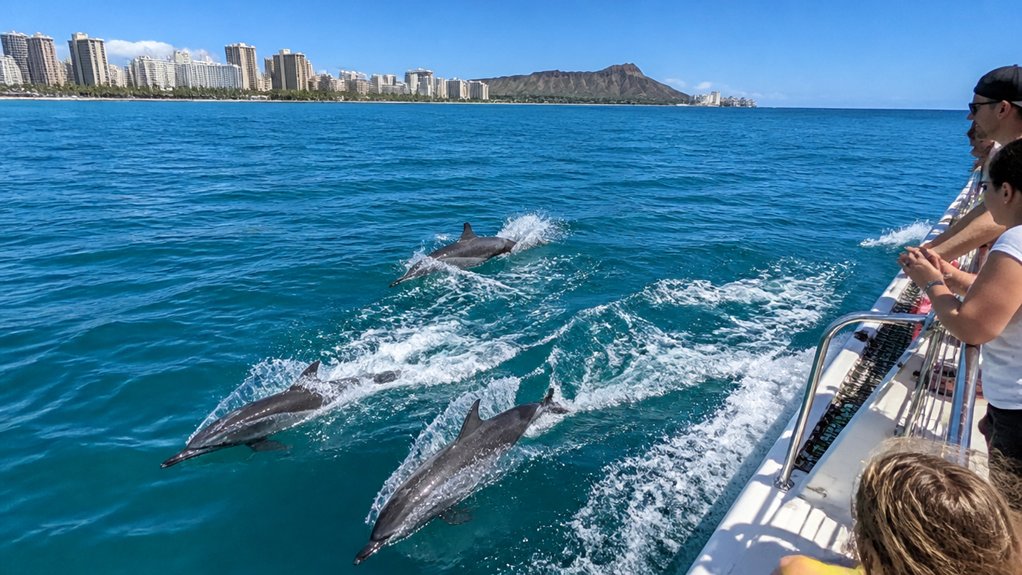
You’ll usually have better luck spotting dolphins in West Oʻahu waters, especially near Electric Beach, where the sea turns deep blue fast and morning boats often catch the first flashes of fins. Right offshore from Waikīkī, sightings are rare, since most dolphins prefer deeper water beyond the nearshore shelf. If you want the best odds, you’ll want a cruise that heads west for 45 to 60 minutes, because the dolphins don’t exactly clock in right by the beach. Some visitors also book a turtle snorkel cruise from Waikīkī, though those trips are generally better known for reef and turtle encounters than dolphin sightings.
West Oahu Waters
Dolphin country starts west of Waikīkī, where the Waiʻanae coast and spots near Electric Beach give boats a much better shot at sightings than the busy shoreline in front of town. If you’re hoping for Dolphins Near Waikīkī, you usually head to the west side instead.
- West Oʻahu drops into deep water fast, so prey comes close and dolphins follow.
- You’ll often spot spinner dolphins resting, gliding through clear warm water, or zipping into bow waves.
- Many tours leave Waiʻanae Small Boat Harbor, about 45 to 60 minutes away, to improve your odds.
- Go early, especially from May through August, when seas are calmer and dolphins tend to stay nearshore.
You can still see them year-round, but Waikīkī itself rarely delivers that morning surprise. Some operators combine these outings with a snorkel cruise, giving you a chance to watch for dolphins while exploring West Oʻahu’s clear coastal waters.
Near Electric Beach
That west side pattern comes into focus near Electric Beach at Kahe Point, one of the most reliable places to spot dolphins near Waikīkī. From a catamaran, you usually head west because the steep drop-off lets spinner and spotted dolphins move quickly from deep feeding grounds to shallower resting water. Early mornings feel best, especially in calmer months from May through August, when lookouts and crews often report regular pods. You might see spinners surfing bow waves or traveling in lively groups close to shore. Bottlenose dolphins show up less often here. Even on a Dolphin Swim style outing, you should watch from the boat and give resting dolphins space. That way the encounter stays memorable, legal, and gentle for everyone onboard and below the surface. Many Kewalo Basin cruises use this kind of local guidance to shape realistic wildlife expectations near Waikīkī.
Offshore From Waikiki
Just offshore from Waikīkī, dolphin sightings can happen, but they’re not the norm right in front of the beach. Most pelagic species favor deeper blue water, so you’ll usually improve your odds by leaving the tourism strip behind and cruising west.
- Head west toward Waianae or Electric Beach, where Dolphin activity is more reliable.
- Look for spinner dolphins in shallow bays and reef channels, usually west or north of Waikīkī.
- Book an early-morning boat, when glassier seas and softer light make fins easier to spot.
- If you visit from May through August, calmer water often helps.
From Waikīkī, that ride can take 45 to 60 minutes. You trade hotel views for open ocean, salt spray, and the quiet thrill of watching carefully out there. A small group catamaran can make that offshore run feel quieter and less crowded while you scan the water.
What Time of Day Is Best for Sightings?
Often, your best shot at spotting dolphins comes early in the day, from sunrise through mid-morning, when they’re most active and the sea usually looks smoother and clearer from the catamaran. If you can, book a cruise that leaves before 9:00 AM. You’ll reach open water while pods are still surfacing, rolling, and cutting silver arcs through the light. Visibility also improves when the water stays glassier, so you can scan farther without squinting through chop. In other words, early in the morning,catamaran trips give you a real edge. Some operators even time shorter transit runs to reach known feeding or resting areas right when dolphins tend to appear. You might still see them later, but dawn hours stack the odds in your favor. That makes breakfast-on-board feel less important, though coffee still earns its keep nicely. This lines up well with the best time of year for catamaran cruises in Waikiki, since calmer seasonal conditions can make morning wildlife viewing even better.
What Seasons Offer the Calmest Dolphin Cruises?
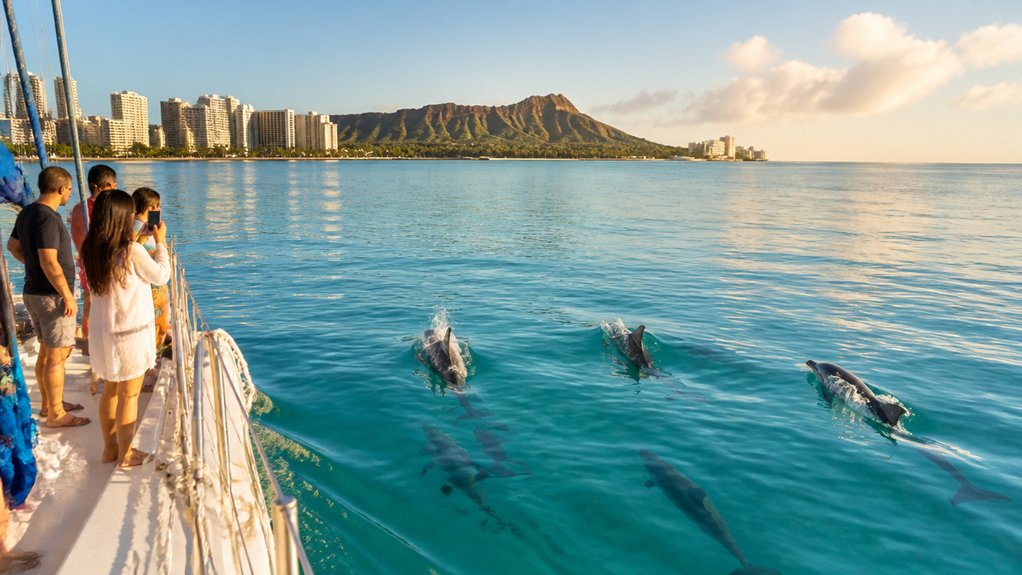
You’ll usually find the calmest dolphin cruises from May through August, when trade winds ease off, the water looks flatter, and the boat ride feels smoother under the morning sun. Spring and fall can still give you sweet little weather windows, especially on early departures, so you’ve got a solid shot at glassier water without needing perfect luck. Winter is a different story, because bigger swells and shifting weather can turn the ocean choppy fast, so you’ll want to check route options and refund policies before you hop aboard. During winter storm periods, northwest swell can push seas into hazardous double-digit heights, especially from Monday night into Tuesday.
Summer Trade Wind Lulls
When summer settles over Oahu, the calmest catamaran dolphin cruises usually arrive with it. From May through August, lighter winds flatten the sea, clear the water, and make your catamaran snorkel feel smoother from the first splash. Waikiki cruises are often at their smoothest during summer trade wind lulls, when lighter breezes help reduce surface chop. You’ll usually want an early departure before 9 a.m., when surface chop is lowest and wild dolphins are more active near shore.
- Flatter water helps you spot dorsal fins sooner.
- Clearer channels improve swim visibility and reef color.
- West Oahu routes often post better encounter rates.
- Summer success brings more departures and easier hotel pickups.
Sightings still aren’t guaranteed, but summer gives you the best shot at a glassier ride, quieter mornings, and dolphins resting closer to the coast. That little weather pause can feel like luck.
Spring And Fall Windows
Summer gets the spotlight, but spring and early fall can feel like the sweet spot for a calm dolphin cruise. If you book from April through June or again in September and October, you’ll often get gentler seas, steadier weather, and lively daytime dolphin activity. That balance matters. You spend less time bracing against chop and more time scanning blue water for quick silver arcs and dorsal fins. An early-morning departure helps most, since dolphins feed and travel around sunrise and the ocean often looks smoother then. Many Waikiki catamaran cruises last long enough to take advantage of those calmer morning conditions before afternoon winds build. If your cruise heads toward West Oahu in late spring, boats can reach offshore feeding areas fast, then return to calmer inshore water for a Snorkel stop. You get smoother riding and better odds, a fine trade.
Winter Ocean Conditions
Although winter can still deliver bright skies and exciting dolphin sightings, the ocean around Oʻahu usually feels less settled from November through March.
- You’ll notice bigger north and northeast swells, so rides can feel bumpier and splashier.
- Early departures still help. Sunrise often brings the smoothest water before winds wake up.
- Crews watch forecasts closely. On a Dolphins Catamaran with Waterslide, they may switch routes or trade offshore stops for reef snorkeling when conditions turn rough.
- If swimming with wild dolphins in calm water matters most, aim for May through August instead, or book a flexible morning trip with clear refund and rebooking policies.
If light showers roll through, a catamaran cruise in the rain can still go ahead safely, but rough seas and strong winds are usually the bigger reasons to reschedule.
Winter can still surprise you with beautiful light, but the sea sometimes likes the last laugh on these island days.
What Sea Conditions Affect Dolphin Sightings?
Often, the sea itself decides how good your dolphin-spotting odds will be on a Waikiki catamaran cruise. When you get calm, glassy seas, crews and passengers can pick out dorsal fins and quick surface flashes much more easily. Those smooth months, often from May through August, turn the ocean into a better viewing window.
Strong trade winds and choppy water do the opposite. Whitecaps hide blows and leaps, and dolphins may stay farther offshore. Heavy swell or murky water from rain and runoff can scatter prey and spread pods out. You should also watch the seafloor. Where the shelf drops fast into deep foraging water, catamarans often find more dolphins than they do over shallow, flat reef zones nearby. If you are prone to motion sickness, calmer sea days can also make the cruise more comfortable while improving visibility for spotting dolphins.
Do Morning Catamaran Cruises Improve Your Odds?
Why do so many crews push off at sunrise? Because morning catamaran departures usually give you a better shot at dolphins. At first light, spinner dolphins are often more active, and calmer water makes offshore pods easier to spot from the deck.
- You get smoother seas, especially from May through August.
- You can scan deeper blue water before wind and swell build.
- You gain time for longer runs toward the shelf drop-off, where dolphins travel.
- You may find tours offering rebooking discounts if no dolphins appear.
For first-time sailors, these earlier departures can also make the overall Oahu catamaran cruise feel more comfortable and easier to enjoy.
Which Waikiki Cruises Give the Best Odds?
Usually, the Waikiki cruises that give you the best dolphin odds don’t stay close to the beach at all. Your best bet is among Waikiki-based catamaran cruises that head beyond the nearshore channel and spend time transiting about 45–60 minutes toward the leeward side. Those longer routes reach clearer blue water over a steep shelf, where dolphins are more often spotted than on quick Waikiki loops. You can also look for itineraries that build in dolphin-watching and offer Waikiki pickup, which makes the logistics easy. Go early if you can, especially in calmer May through August. And choose operators that keep a respectful distance, follow NOAA guidelines, and let the ocean stay wild while you watch. Nice bonus: calm seas make binoculars less useless. If dolphin sightings are a priority, choosing one of the best seats on a catamaran can also make it easier to scan the water comfortably during the longer offshore run.
Are West Oahu Dolphin Tours Better?
If your main goal is spotting wild dolphins, West Oʻahu tours are usually the stronger bet. The shelf drops fast off Waiʻanae and Makaha, so dolphins can move easily between deep feeding water and calmer coastal rest areas. That geography gives you better odds than staying near Waikīkī.
- West Oʻahu routes reach higher probability habitat, especially on early departures.
- Spinner and spotted dolphins show up often, and calm summer seas can help.
- Many boats leave from Waiʻanae Small Boat Harbor, and some include free Waikīkī transfers.
- Good operators keep respectful distance and may offer rebooking or partial refunds if sightings miss.
You trade city views for blue water, salt air, and a smarter chance. Year-round, that edge feels hard to ignore, even before breakfast. A private catamaran charter can also give you more flexibility in timing and routing, though it usually costs more than joining a shared dolphin tour.
What Happens on a Waikiki Dolphin Cruise?
Often, a Waikīkī dolphin cruise starts with an early check-in at the harbor, a quick safety talk, and then the catamaran slips past the beach hotels and heads for deeper blue water. You settle onto the netting or shaded bench as the crew scans the horizon with binoculars and points the boat west, where sightings improve. If dolphins appear, you watch from the bow as the hull skims over swells and salt spray cools your face. Many trips then turn into a Snorkel Adventure at a calm reef like Turtle Canyon. You get gear, a briefing, and time to float above coral and turtles. Restrooms and drinks keep things simple. A Swim with Dolphins Catamaran tour often feels half wildlife search, half breezy morning sail. Even without a sighting, the trip still offers a relaxing catamaran cruise experience along the Waikīkī coast.
How Do Tours Watch Dolphins Responsibly?
The best Waikīkī dolphin cruises keep the magic in check with a clear rulebook and a calm captain at the helm. You see dolphins with more respect than rush, because good crews let the pod choose the moment in its natural habitat.
- Captains stay at least 50 yards back and slow down, or even cut engines, if dolphins glide closer.
- Lookouts, hydrophones, and shared sightings help crews find pods without chasing them across open water.
- Before you watch, you’ll get simple etiquette: stay quiet, don’t feed, don’t touch, and wear reef-safe sunscreen.
- If swimming is allowed, groups enter in waves, time in the water stays short, and guides teach conservation while permits stay current, so your encounter feels thrilling, gentle, and genuinely wild out there.
In Hawaiʻi, spinner dolphins are protected by federal law that prohibits swimming with, approaching, or remaining within 50 yards of them.
Are Waikiki Dolphin Cruises Worth Booking?
Usually, a Waikīkī dolphin cruise is worth booking when the boat heads beyond the hotel-lined shore and treats dolphin watching like a real offshore search, not a quick spin past Diamond Head.
You’ll rarely see dolphins off Waikīkī, so smartest trips push toward deeper water or connect you to west-Oʻahu routes near Waiʻanae. Early mornings help. Calmer seas from May through August often make fins easier to spot and the ride smoother. Operators with Waikīkī pickup and shelf-focused searching usually give you a better shot than short sails. If you want contact, though, keep expectations realistic. Wild dolphins don’t work on your schedule. Book a licensed watch tour for viewing, or choose a controlled program like Dolphin Quest when certainty matters more than surprise.
Frequently Asked Questions
Can You Swim With Dolphins on Waikiki Catamaran Cruises?
No, you usually can’t swim with dolphins on Waikīkī catamaran cruises; nearshore sightings are uncommon. You’ll need a west-side or offshore tour, where operators follow swim restrictions and conservation guidelines, letting dolphins approach you voluntarily.
Are Dolphin Sightings Guaranteed or Refundable if None Appear?
No, you can’t count on guaranteed sightings because wildlife unpredictability rules the ocean. If none appear, you should check operator policies: some offer refunds, others give rebooking discounts or partial credit, depending on your terms.
What Should I Bring for Dolphin Watching Photos?
Bring a telephoto lens, polarizing filter, waterproof bag, and lens cloths; like chasing Moby-Dick’s flash, you’ll want burst mode, fast shutter speeds, and a quick camera or stabilized phone so you don’t miss leaping dolphins.
Are Waikiki Dolphin Cruises Suitable for Young Children?
Yes, you’ll find many Waikiki dolphin cruises suitable for young children, with family friendly seating, age appropriate activities, child-sized life vests, and helpful crews; just check swim requirements, transfer times, restrooms, and cancellation policies beforehand.
Do Catamaran Cruises Accommodate Wheelchair or Mobility Needs?
Yes, you’ll often find wheelchair access and mobility accommodations on catamaran cruises, but they vary by operator. You should call ahead, request boarding help, and confirm whether transfers, seating, restrooms, and activities fit your needs.
Conclusion
Book a Waikiki catamaran for the breeze, blue water, and skyline views, then treat any dolphin sighting like found treasure. You’ll have the best shot on early departures, calm summer mornings, or longer runs west toward deeper water. Most days, you’ll hear rigging clink, feel salt on your arms, and watch Diamond Head fade behind you. If dolphins appear, the moment lands like silver punctuation on the sea. That’s reason enough to keep looking.